What is the best layout for my kitchen?
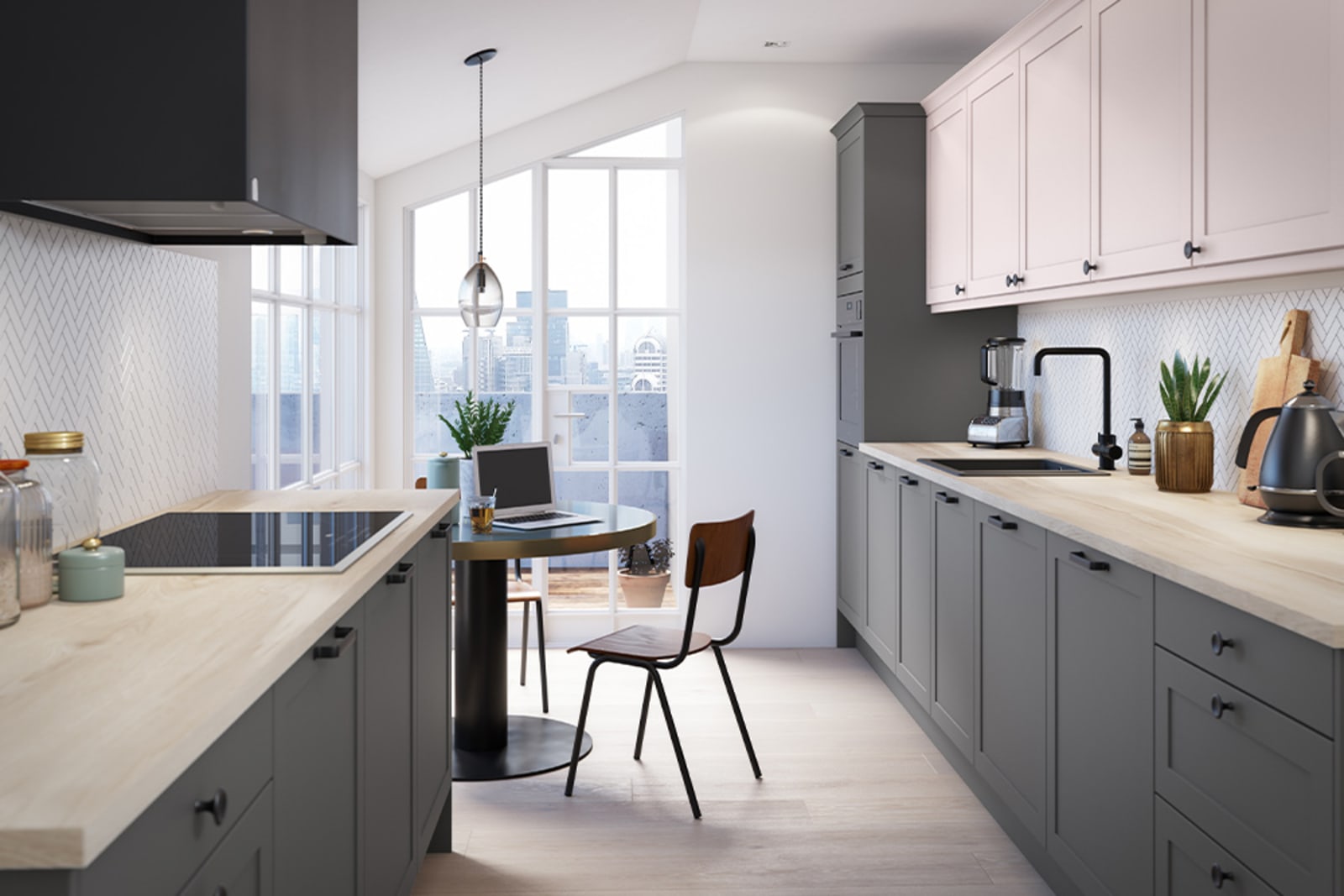
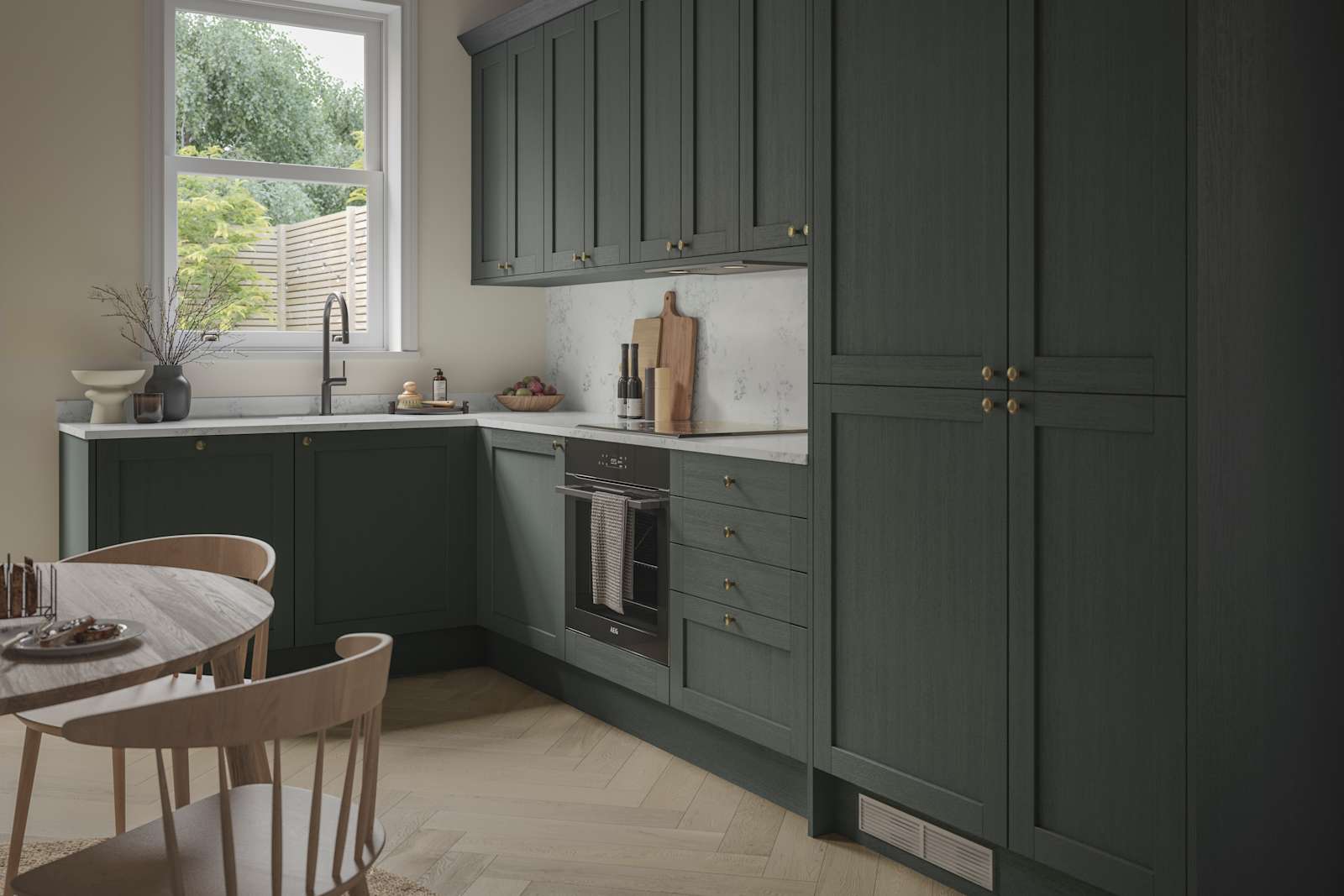
The best kitchen layout should fit your room perfectly, making it unique to your space. But what things should you be looking for? Whether your kitchen is big or small, square or rectangular – or even an odd, awkward shape – there are several factors to consider when you’re picking a layout.
Factors to consider when planning a kitchen layout:
1. The size of the space
Start by taking some basic measurements to determine the size of the room. U-shaped or one-wall kitchens are better suited to small kitchens, while open-plan and L-shaped kitchens work well in larger spaces. You could also try sketching the room to see how its shape might accommodate different layouts.
2. Appliance placement
Your water and electrical outlets will determine where you can put your sink and appliances. Decide whether you’re happy to stick with this arrangement or you want to move your outlets to accommodate a new layout. Keep in mind the kitchen triangle theory, which states that the main items in your kitchen – the hob, sink, and fridge – should be arranged at the three points of a triangle.
3. Kitchen storage
Don’t fall into the trap of underestimating how much storage you’ll need. Consider how much space you want to dedicate to storage and what types of kitchen storage will be most effective at housing the things you own.
4. Traffic flow
Ensure there is enough space for movement, especially if multiple people will be using the kitchen at the same time. Many people abide by the 3 x 4 traffic rule in kitchen layout design.
5. Dining areas
Some kitchen layouts include an in-built dining option, whether that’s a G-shaped kitchen with a peninsula that doubles as a breakfast bar or an open-plan kitchen with an island. These layouts are ideal for informal dining, but if you have your heart set on a kitchen table, consider how you’ll work this into your chosen layout.