




One-Wall Kitchen Ideas
The single-wall kitchen is a versatile layout, suited to large and small rooms. Flexible enough to run the length of your chosen wall, this type of kitchen can be as long or as short as you need. When combined with an island, it can also bring order to large, open-concept spaces, creating a focal point.


What is a one-wall kitchen?
In a one-wall kitchen, all of the essential items – cabinets, countertop, and appliances– are arranged along a single wall, leaving the remaining space open. Using a single wall allows you to consolidate all your major kitchen workstations into one area, improving efficiency.
One-wall kitchens are ideally suited to small spaces but also work well in large open-plan rooms, providing structure and a focal point. Utilising a single wall frees up space for other important functions, such as dining, studying, or relaxing.
If you want something effortless, affordable, and easy to manage, a single-wall kitchen could fit your lifestyle.

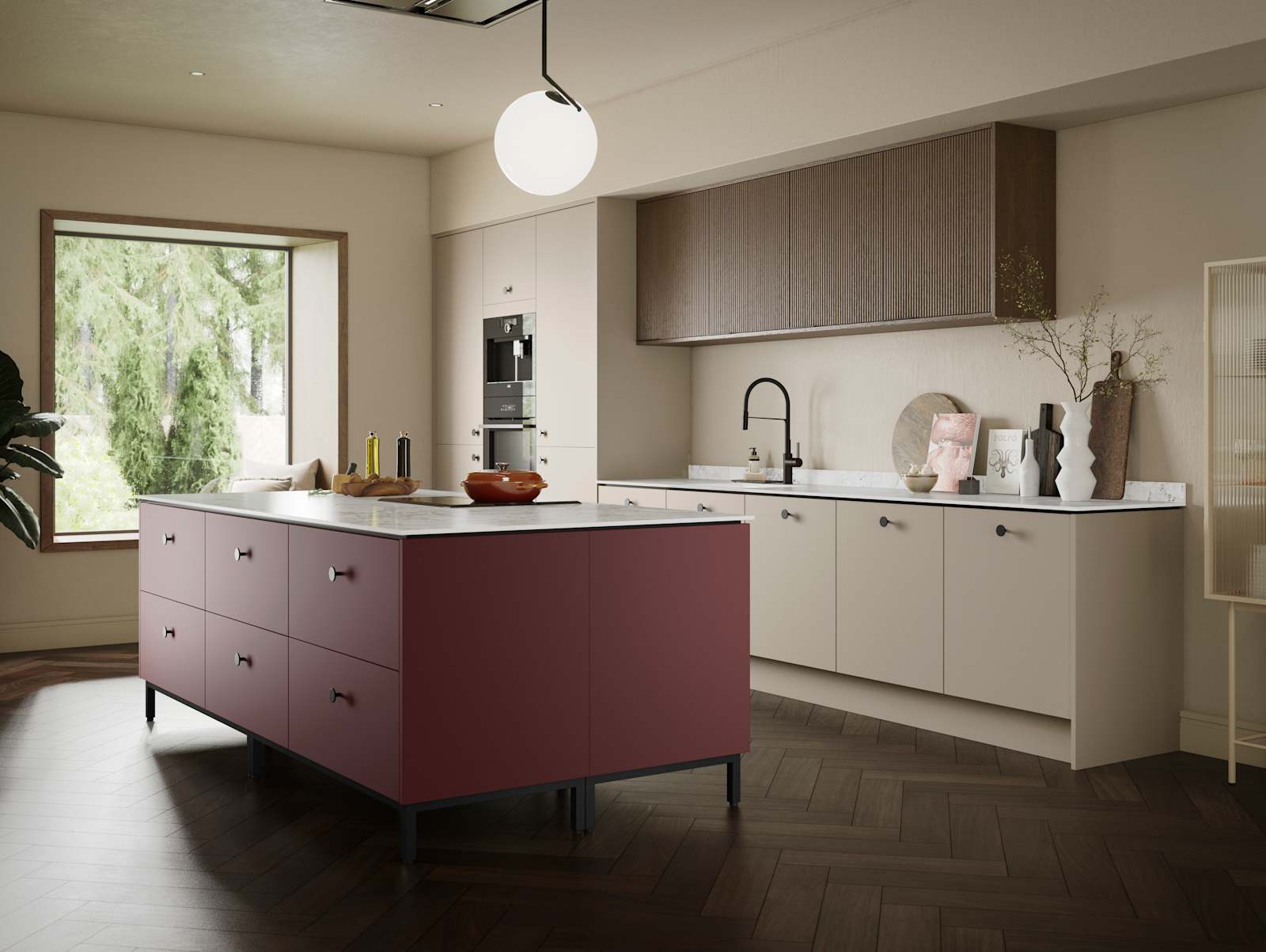
Benefits of single-wall kitchens
Having your kitchen arranged along a single wall helps you achieve a sleek, contemporary look in a simple, unassuming way.
As an alternative to traditional, more spread-out large kitchens, this layout is better suited to modern life.
For people with busy lifestyles, this kitchen style is efficient. Beyond its clean, polished look, a one-wall kitchen layout offers many benefits.
Compact size
The biggest advantage of this layout is being able to achieve a compact one-wall kitchen.
If you love the idea of an open-plan home, this style of kitchen could work well for you – even when space is tight.
When planned effectively, a compact one-wall kitchen conserves space by placing all work areas (such as the cooker, sink, and refrigerator) along the same wall.
This layout leaves ample room for a kitchen island or dining table, or a lounge area with a chillout zone.
Cost effective
Another major benefit of choosing a single-wall kitchen is affordability. This kitchen style is significantly cheaper to build than galley kitchens or other popular layouts.
With a straightforward design and fewer materials, one-wall kitchens are a budget-friendly option that can still look premium.
With a compact kitchen, you can invest in marble worktops and luxury flooring to achieve a high-end finish in a smaller space.

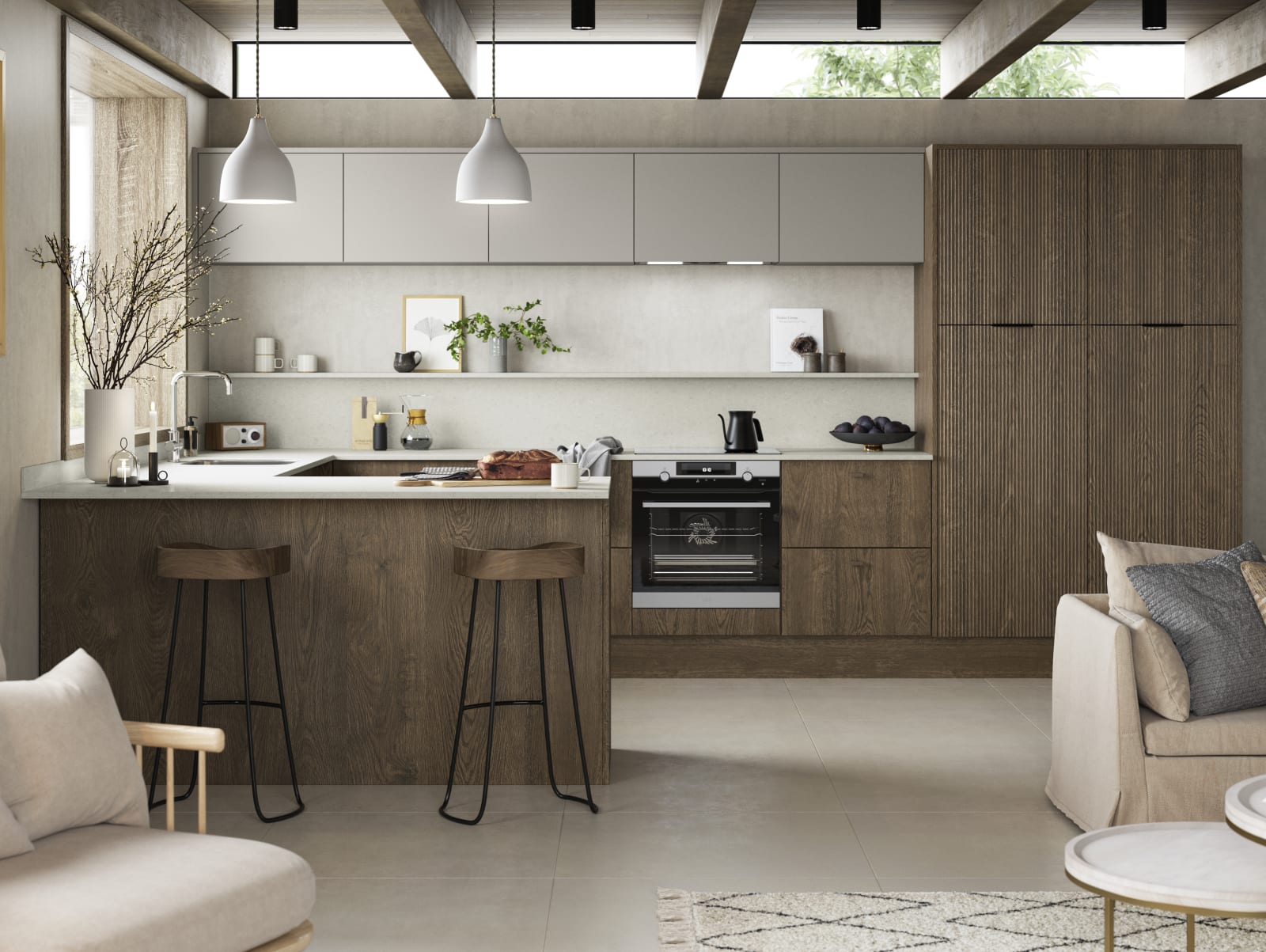
Easy to install
In addition to being cheaper to install, this kitchen design requires less labour to complete.
This means that the turnaround time is faster, causing less disruption to your home.
Additionally, the design process is simplified, making it easier for you to choose all the finishes and features you want.
Requires less maintenance
Smaller kitchens require less cleaning and have minimal upkeep. If you don’t have time to manage a large traditional family kitchen, this design style makes a lot of sense.
It’s hugely popular with busy working professionals who like to rustle up a quick meal when they get home, and it’s also perfect for busy families where one person usually does the cooking.
Create your single wall kitchen
In-Store or Virtual Design Appointment
Looking for help designing your one wall kitchen? Book a free Design Consultation with one of our kitchen experts today.In-Store or Virtual Design Appointment
Looking for help designing your one wall kitchen? Book a free Design Consultation with one of our kitchen experts today.Create your single wall kitchen
Disadvantages of one-wall kitchens
While one-wall kitchen ideas can transform your home, there are limitations to consider. Here are some reasons why it may not be the right kitchen design for you.
Size restrictions
Having your kitchen on a single wall is convenient and can create an efficient workflow for cooking, cleaning and food prep. However, it can also be restrictive in terms of additional features, so you will need to stick with the most basic functions.
It also means you will need to maximise the space you have with well-thought-out storage solutions.


Single-person kitchen
Got multiple cooks in the home? Then a small kitchen layout may not work for you. The single-wall style provides the most value when only one person uses the kitchen.
If you’re looking to add more work surfaces to accommodate a second user, consider adding an island to your one-wall kitchen.
Can affect resale value
Unlike large kitchens with a traditional triangle layout, a one-wall kitchen may not provide the value boost you want for your property.
This is because larger kitchens are usually highly desirable to buyers, making homes much more saleable.
Despite this, Magnet offers many options to create a premium kitchen, so you can still make a strong impression when selling
Magnet’s one-wall kitchen ideas
Use our Kitchen style finder to find inspiration for your one-wall kitchen design.
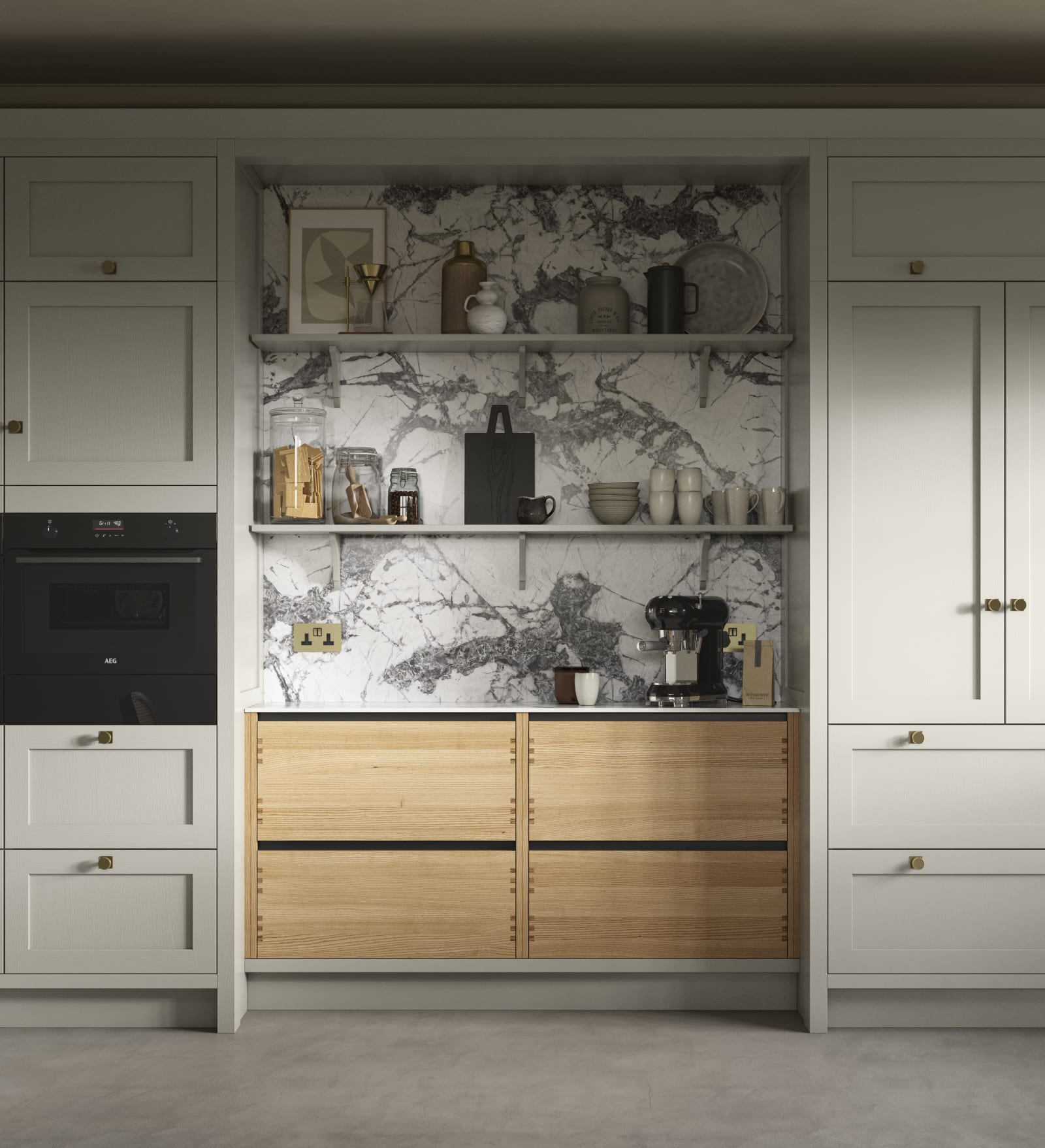


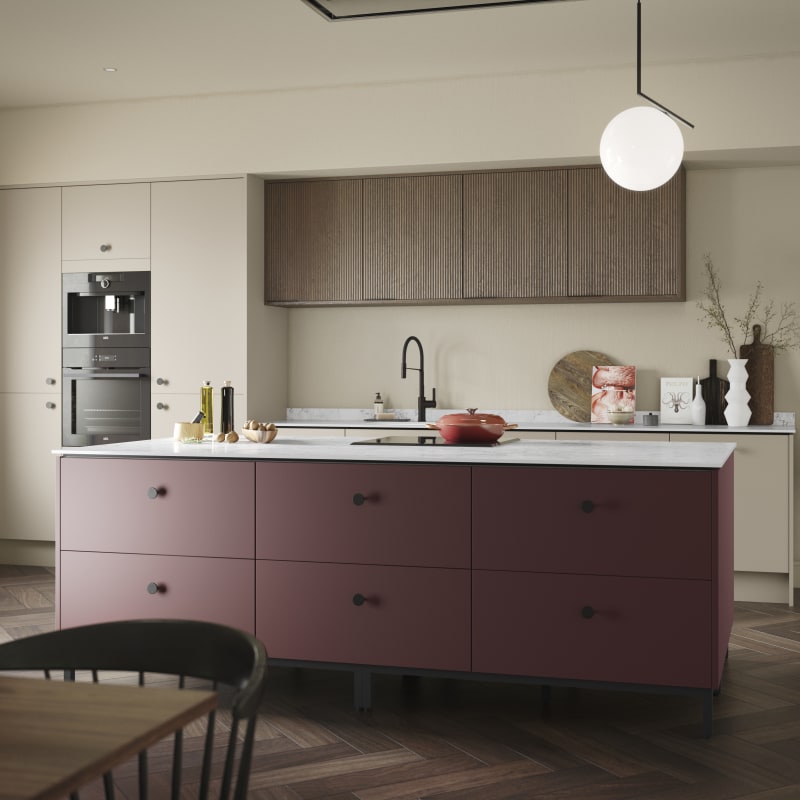
One-wall kitchen with island
If you have enough space, consider adding an island to your one-wall kitchen. This trending kitchen layout is both practical and stylish, creating a focal point that doubles up as a social hub for your home.
Having an island expands your kitchen's functionality in several ways. Opt for an island with undercounter cabinets for extra storage, or replace your cabinets with bar stools to create an informal dining area for guests.
Additionally, you can integrate your sink or hob into your kitchen island. Positioning your hob or sink in this way allows you to configure your most frequently used appliances in a triangle for an efficient kitchen workflow (read more on the golden triangle theory).

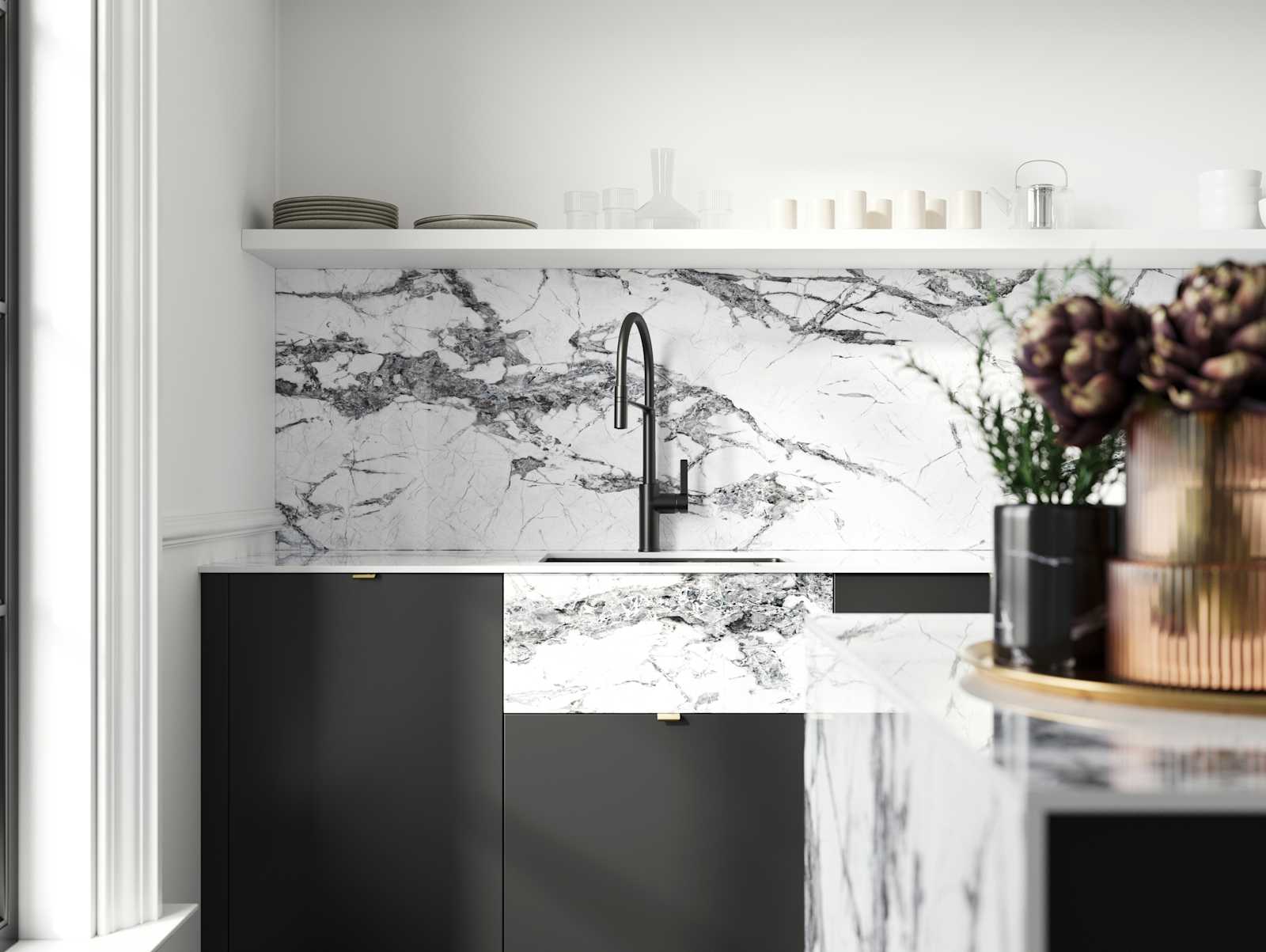
Storage and space-saving solutions
If you want to use this kitchen layout in your home, follow these tips to help you optimise the space.
Add open shelves to your design
Shelving is a great way to optimise vertical wall space, and open shelves are a cost-effective alternative to wall cabinets, maximising your budget and allowing you to spend more on luxury finishes elsewhere.
Open shelving has a sleek design. They take up less space, create a more open look, and are fully customisable, making them ideal for tight or awkward spaces. They’re also great for displaying your cookbooks and dried food jars.
Choose integrated appliances
Integrated appliances not only save space but also fit seamlessly into your design. Because they aren’t disrupting the flow of your cabinetry, the space feels more harmonious.
Opting for integrated appliances when both floor and wall space is limited is a great way to make use of compact spaces, but be sure to invest in smart storage solutions so you don’t compromise on your key storage areas.


Buy multifunctional furniture
One-wall kitchen ideas work best when you can kill two birds with one stone, saving space and money. Opting for multipurpose furniture is a great way to do this, as is adding an island that doubles as storage.
If you want to maximise floor space, a foldaway dining table or an extending sideboard could be useful. Consider installing a kitchen worktop extender for a breakfast bar that can be hidden away when you’re done.
Picking a colour palette for a single-wall kitchen
The right colour palette can make all the difference when it comes to optimising your kitchen layout.
If your room is small, a light or neutral palette may be best for creating the illusion of space. This can be achieved with a tonal or harmonious colour palette. A tonal palette uses shades of a single colour, while a harmonious palette combines different colours that sit next to each other on the colour wheel (green and blue, for example).
Alternatively, to prevent your kitchen from looking flat and one-dimensional, use contrasting hues from opposite ends of the colour wheel (a complementary colour palette). For example, pink and green are often used together in kitchen design.


Open-plan concepts and feature walls
If you have an open-plan layout, consider creating a focal point to tie the room's elements together by making your one-wall kitchen a feature wall.
Feature walls offer ample opportunities to experiment with colours, textures, and patterns. It’s a quick and easy way to elevate a space, and can also be used to direct flow around the room.
If you’re designing a multifunctional kitchen (such as a kitchen-diner or kitchen and lounge), a feature wall can effectively delineate the kitchen zone while serving as a focal point. Consider combining a colourful splashback, statement lighting, and open shelving with striking artwork.
See why Magnet customers rated us "Excellent"
A kitchen is a significant investment, and hearing from people who've already made that decision can help you make yours with confidence.


