



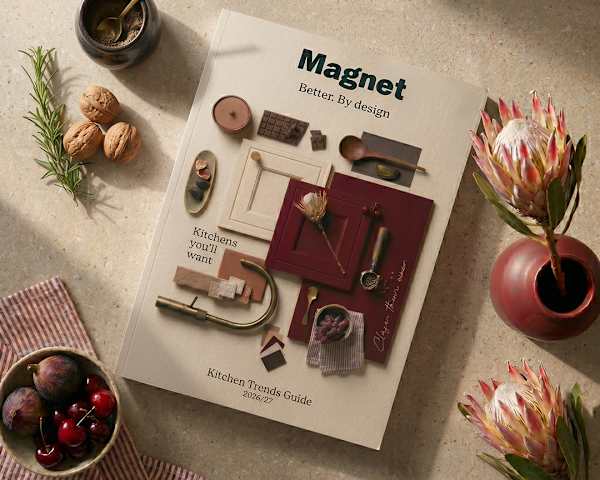
Introducing the Magnet Kitchen Trends Guide


Ways to pay
With our range of flexible finance solutions to suit all budgets.
A kitchen feature wall adds style and personality, creating a focal point for the room. Get inspired with our expert tips for feature walls.


A feature wall looks great in every room and makes your home stand out by offering something different. Adding a feature wall in the kitchen is not only aesthetically pleasing, but it can create a focal point, drawing the eye to your chosen area.
Focal points are one of the most fundamental elements in home interiors, giving you an easy foundation from which you build the rest of your design. How you design your feature wall is completely up to you, and there are many materials that can be used to turn your vision into reality.
Looking for more inspiration? Explore our collection of kitchen ideas to discover layouts, colour schemes, storage solutions and design trends for every style of home.


A feature wall might feel like a more permanent design choice, but there are plenty of flexible ways to achieve the look without committing to anything long-term. We’ll explore the different options later in this guide, but first, here’s why feature walls are especially popular in kitchens compared to other rooms in the home:
Tiled feature walls are a favourite for kitchens and bathrooms, as they can double up for functionality. For instance, creating a beautiful tiled pattern behind your cooker space gives you a splashback to protect the wall behind.
Tiles add instant texture and can be used to create a whole range of colours and patterns. You can even have mismatched tiles for something unique.
Brick tiles are one of the most versatile options if you want a more subtle design, while still having textural benefits. They can be arranged in a variety of patterns too - not just the classic horizontal running bond.
Tiles add texture and allow you to experiment with colour and pattern, including unique contrasting designs.


Choosing chevron over a traditional running bond can elevate your kitchen, giving it a fantastic point of difference from the rest of the house. By adopting this pattern, you can bring a one-colour tiled wall to life.
This pattern adds texture and interest, especially in contemporary or minimalist kitchens.
Like chevron tiles, the herringbone pattern creates a vertical focus and can make your ceilings appear higher. Use the standard herringbone pattern, or create more visual interest with a double herringbone. The style of herringbone is considered to be classic, making it ideal for traditional interiors, but it works just as well in modern kitchens.


Basket weave patterns can be horizontal or diagonal, depending on whether you want to elongate or widen the wall. You can also choose between a single or double weave, with double weave offering one of the most visually complex and intriguing brick styles. Basket weave works in every style of home, particularly in kitchens with a maximalist approach to walls.
While kitchen feature wall paint ideas are generally the easiest to apply, wallpapering can be a fantastic investment if you want to add value. Even a house in poor condition can be made to look great with quality wallpaper, and wallpapering is one of the oldest tricks in the book for hiding wall imperfections.
The design selection is endless too, giving you prints and patterns that go far beyond the possibilities you have with paint. Here are just a few popular wallpaper trends that could look great in your kitchen:
Wallpaper can replicate the look of brick, tiles, or natural stone like marble on your feature wall without the renovation work. For renters or those looking for flexibility, removable peel-and-stick wallpaper provides an easy, non-permanent solution.


If you want your kitchen to stand out, an abstract feature wall offers freedom to personalise your space. Bold brushstrokes, geometric shapes, or artistic patterns can create a unique focal point that reflects your style and energises the room.
Floating or wall-mounted shelves add both dimension and function. Use them to display favourite crockery, plants, or décor items. Arranging shelves in a diagonal or staggered pattern can bring visual interest without overcrowding the wall.
Feature wall lighting can enhance mood and highlight textures or patterns. Wall sconces are available in a variety of styles, from art deco and mid-century modern to Nordic, rustic, or minimalist designs, allowing you to complement your kitchen’s overall aesthetic.
Wallpaper or painted murals are a striking way to create a statement wall. Choose scenes that inspire, such as city skylines, leafy jungles, beaches, mountains, or gardens. Murals also work well for entertaining, offering a conversation-starting backdrop, or to add an artistic element to your kitchen.
One of the simplest ways to transform a kitchen feature wall is by painting it a different colour from the rest of the room. Using colour thoughtfully can bring warmth, personality, and cohesion to your kitchen design.
Consider these approaches based on colour theory:
Paint is also a versatile alternative to wallpaper. For a textured effect, try sponges or rollers. Stamps, stencils, or free-hand painting can create patterns and unique designs. In rented homes, check your tenancy agreement before painting, but simple feature wall transformations are often allowed with permission.
A practical way to plan colour on a feature wall is the 60-30-10 rule:
This rule ensures a balanced, visually appealing space, allowing your feature wall to pop without overwhelming the kitchen.
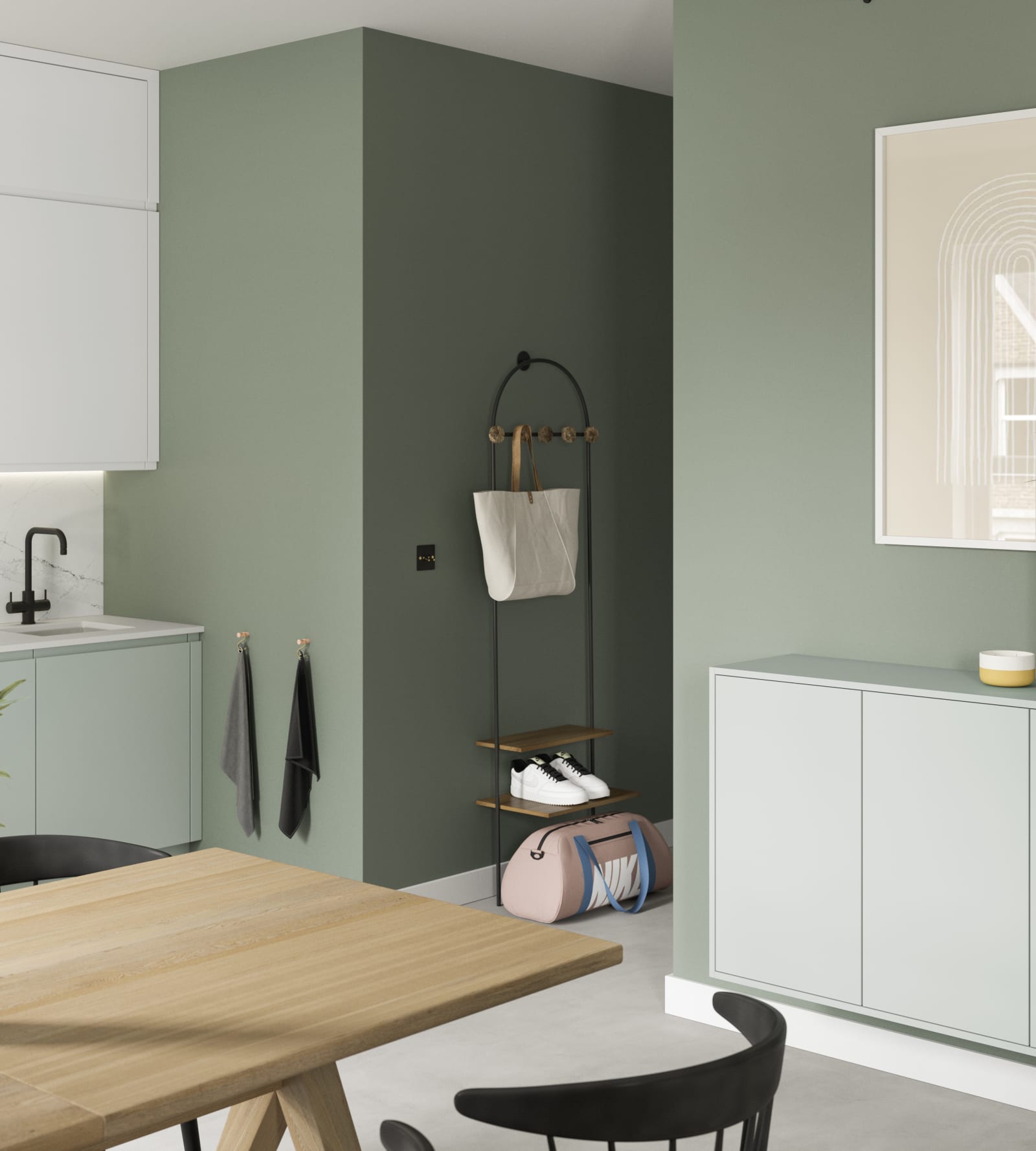

In 2026, feature walls – or accent walls – are moving beyond simple paint. Key trends include:
Using one of these approaches for your kitchen’s feature or accent wall ensures your design feels modern, personalised, and aligned with the latest trends.
Discover our 2026/27 Kitchen Trends Guide for our take on this year’s styles.
Lines are a powerful tool in interior design, bringing order and rhythm to a space. In kitchens, they can also help create the illusion of space and height.


Horizontal lines are among the most natural and comfortable design elements. They form a solid, harmonious relationship with your surroundings, which can help you create calming decor for your kitchen. They can also visually expand a space, making rooms appear wider.
Horizontal wall designs are universally stylish and look great in every style of home, including traditional or contemporary, minimalist or maximalist, and city-urban or country-rustic.
Vertical lines in interior design are associated with strength, stability, elevation, and balance. They move your visual plane and focus the eye upwards, and this is what can make a wall appear higher. If you have low ceilings or you want to draw attention to decor details above the natural sightline, utilize vertical lines in your feature wall design.
For instance, for period properties with striking ceiling designs or farmhouse properties with wood beams, it could be worth creating an upward focus.

You don’t need to spend a fortune to make a statement in your kitchen. There are plenty of budget-friendly ways to create a feature wall that looks stylish and personalised:
Even on a budget, your feature wall can become a focal point that elevates your kitchen’s style.
Choose a wall that naturally draws the eye and highlights a key part of your kitchen. Typically, this could be the wall behind the cooking area, the sink, or a space with open shelving. Avoid walls that are too busy with doors or windows, and consider where you want the focal point to be in the overall layout. A feature wall should enhance your kitchen’s flow and create visual interest without overwhelming the space .
This is a classic colour strategy for balanced interiors. In a kitchen, roughly 60% of the colour comes from the dominant shade (usually walls or cabinetry), 30% from a secondary colour (cabinets, furniture, or larger accents), and 10% from a highlight or accent (accessories, splashbacks, or décor). Following this proportion keeps the space cohesive while allowing for pops of personality .
Accent or feature walls remain popular, especially when approached thoughtfully. More timeless designs lean towards subtle, considered contrasts rather than bold, overpowering colours. Designers favour materials, textures, and curated palettes that complement the rest of the kitchen while creating a clear focal point .
Start by selecting the wall and material (paint, tile, wood, or panelling) that complements your kitchen style. Consider texture, pattern, and colour to make the wall stand out. Keep the rest of the space neutral or cohesive to avoid visual clutter. Accessories, lighting, and artwork can further enhance the wall, making it a natural focal point that balances both form and function .