




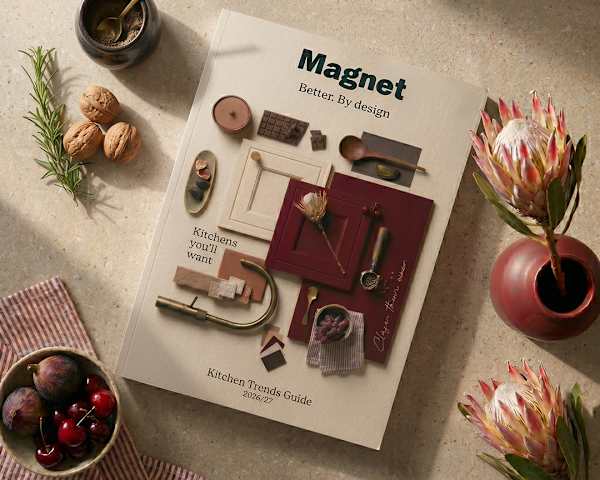
Looking for ways you can bring natural materials into your kitchen?
Natural Material Revival: How to Use Timber, Stone and Wood in Your Kitchen Design
Natural materials have become one of the defining influences in kitchen design for 2026. As homeowners seek spaces that feel warmer, more authentic and more connected to everyday living, materials such as timber, stone, marble and granite are taking centre stage.
At Magnet, we believe the most successful kitchens are those that feel personal, purposeful and built to last. Natural materials bring together beauty, durability and craftsmanship, helping to create kitchens that truly belong in your home and stand the test of time.
Written by Cath Harrison (Head of Product) & Amy Fort (Product Expert)
Blog
Published
29 Jun 2026


Why natural materials are popular in modern kitchen design
Natural materials are enjoying a revival in modern kitchen design, not as a passing trend, but as a way to bring warmth, simplicity and authenticity to your living space for years to come. Whether through the grain of timber, the texture of stone or the softness of organic finishes, these materials bring a timeless quality that feels both current and enduring.
Unlike manufactured alternatives, natural kitchens possess unique characteristics that cannot be replicated. The grain of oak, the veining of marble and the texture of natural stone add depth, personality and individuality to every kitchen.
Popular natural materials for kitchen design include:
- Oak
- Walnut
- Bamboo
- Marble
- Granite
- Natural stone
- Timber flooring
- Solid wood worktops
When carefully combined, these materials create layered interiors that feel calm, considered and effortlessly elegant.
Looking for ways you can bring natural materials into your kitchen? Download our 2026/27 Kitchen Trends Guide for expert ideas on using wood tones, stone textures, organic finishes and nature-inspired colour palettes in a way that feels balanced, practical and beautifully timeless.

“The appeal of natural materials reflects a growing need for texture and tactility, creating an instinctive connection to the physical world. These qualities become more valuable as daily life grows ever more digital.”

Timber and wood in kitchen design
Few materials offer the versatility and enduring appeal of timber. Whether used for cabinetry, flooring or worktops, wood introduces warmth and character that instantly softens a kitchen space. Each timber species brings its own distinct personality:
- Oak: A perennial favourite, oak offers exceptional durability and attractive grain patterns. Its warm golden tones work beautifully across both traditional and contemporary kitchens, making it ideal for cabinetry and flooring.
- Walnut: Walnut delivers a richer, more luxurious aesthetic. Deep chocolate tones and striking grain patterns make it a popular choice for statement cabinetry, shelving and feature worktops.
- Bamboo: For homeowners seeking a sustainable alternative, bamboo offers impressive strength and a distinctive fine grain. As a rapidly renewable resource, it combines environmental credentials with modern style.
Timber kitchen cabinetry
Natural timber cabinetry creates an inviting foundation for kitchen design. Finishes can dramatically influence the overall aesthetic:
- Oiled finishes enhance natural grain and texture
- Lacquered finishes offer greater protection and a refined appearance
- Stained finishes allow colour customisation while retaining character
- Raw finishes deliver a contemporary organic look
Well-crafted timber cabinetry also offers exceptional longevity. Magnet's commitment to quality craftsmanship ensures kitchens are designed to be enjoyed for years, not simply seasons.
Wood worktops and timber surfaces
Wood worktops remain a popular choice thanks to their warmth and tactile appeal. Unlike many surfaces, timber develops a natural patina over time, adding even more character as it ages.
One of timber's greatest advantages is its ability to be restored rather than replaced. Minor scratches and marks can often be removed through simple refinishing, extending the lifespan of the surface considerably.
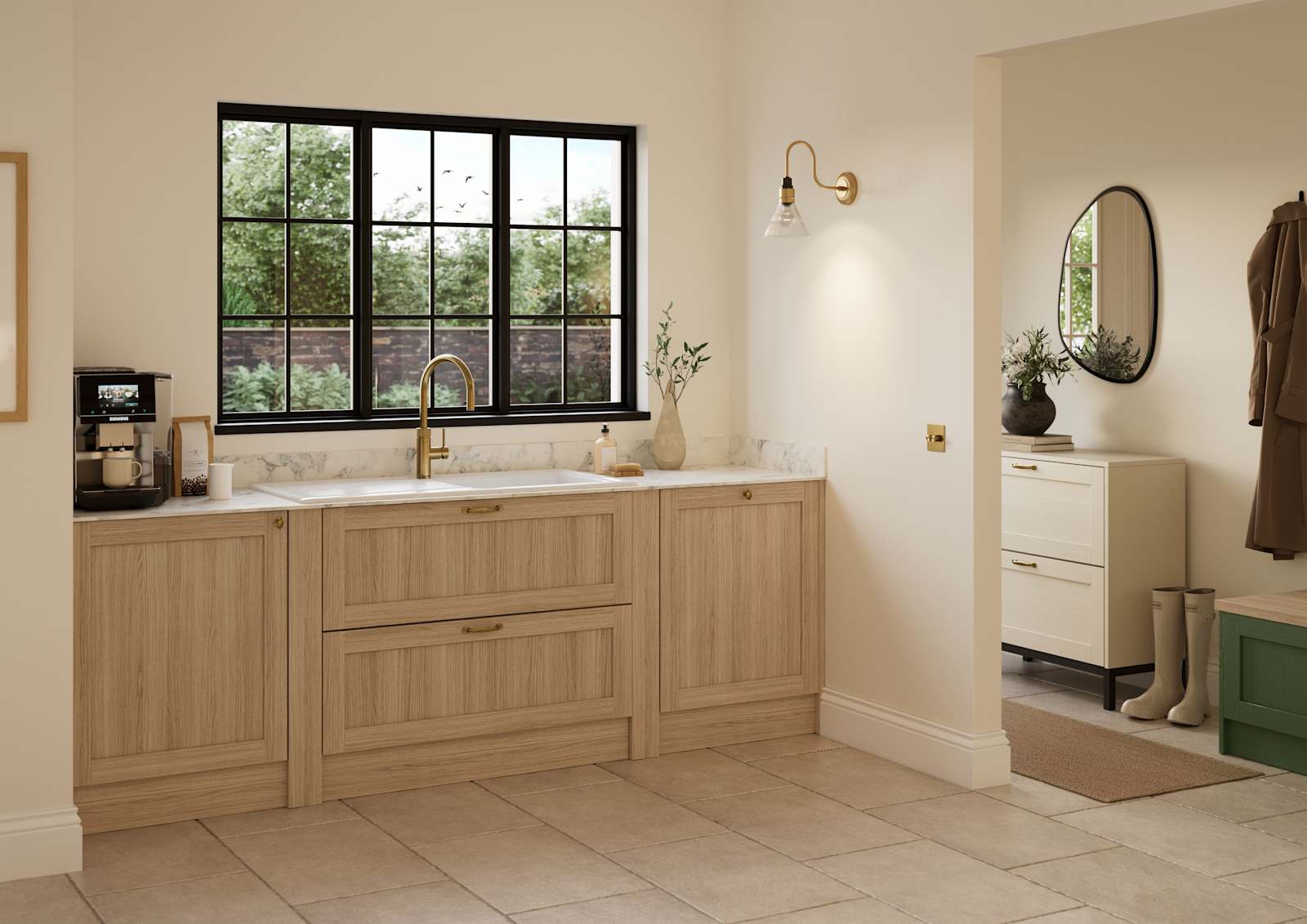
For those seeking the natural look of timber with less maintenance, Magnet's True-touch oak kitchens combine the visual richness of wood grain with the practicality of a durable, easy-care finish. The result is a kitchen that captures the warmth, texture and organic character of timber while fitting seamlessly into modern family life.
Wood flooring in the kitchen
Wood flooring helps create visual continuity throughout open-plan homes while providing warmth underfoot.
Engineered oak and walnut are particularly well suited to kitchen environments due to their stability and durability. When properly sealed and maintained, quality timber flooring can provide decades of performance while complementing other natural materials beautifully.

/Magnet_kitchens_York_43)

Stone and stone-effect finishes in kitchen design
Natural stone has long been valued for the character it brings, from subtle veining and tonal variation to surfaces that feel grounded and tactile. Today, you can choose from natural stone and high-quality stone-effect finishes to achieve a premium look in a way that suits your lifestyle, maintenance preferences and budget.

Stone worktops and countertops
Stone worktops often become the focal point of a kitchen design. Different finishes can significantly influence both appearance and performance:
- Polished: reflective and elegant
- Honed: softer, matte appearance
- Leathered: textured and tactile
- Brushed: naturally aged aesthetic
Pairing stone worktops with timber cabinetry creates a balanced contrast between warmth and sophistication, helping to achieve a timeless organic aesthetic.
Stone-effect finishes
Stone-effect finishes offer the beauty of natural stone with the practicality required for modern family life. Available in a wide range of colours and patterns, they can recreate the look of marble, granite and other natural stones while offering a durable surface that's easy to care for.
Laminate worktops with marble- or granite-effect finishes are a popular choice for homeowners looking to achieve a premium look and feel without the maintenance associated with some natural materials. As with natural stone surfaces, stone-effect finishes pair beautifully with timber and wood-effect cabinetry, helping you combine organic texture with practical everyday performance.
Sustainability and the use of natural kitchen materials
Sustainability continues to influence material choices across modern kitchen design.
Natural materials can support more environmentally conscious kitchens when responsibly sourced. Key considerations include:
- FSC-certified timber products
- Responsibly quarried stone
- Rapidly renewable materials such as bamboo
At Magnet, sustainability forms an important part of our approach, with cabinets manufactured using 100% responsibly sourced timber and a continued focus on reducing environmental impact across our product ranges.
Perhaps the most sustainable choice of all is investing in quality. Durable materials that last for decades reduce the need for replacement, helping minimise waste while delivering better long-term value.
Caring for natural materials in the kitchen
Understanding maintenance requirements is essential for preserving the beauty and longevity of natural materials. While timber, stone and marble are renowned for their durability, they perform best when cared for correctly. Regular cleaning, protection from excessive moisture and heat, and occasional maintenance can help these surfaces retain their character for years to come.
Caring for timber surfaces
To keep timber looking its best:
- Re-oil surfaces when they begin to appear dry
- Clean spills promptly
- Protect against prolonged moisture exposure
- Avoid harsh chemical cleaners
Hardwax oils and food-safe wood oils are particularly effective for maintaining worktops and timber surfaces.
Caring for stone, marble and granite
Natural stone requires simple but consistent care:
- Seal surfaces at recommended intervals
- Use pH-neutral cleaning products
- Avoid acidic cleaners on marble
- Wipe spills immediately
Regular maintenance protects the natural beauty of stone and helps maximise its lifespan.
Integrating natural materials for a cohesive kitchen
The most successful natural kitchens balance different materials to create depth and harmony.
Consider combining:
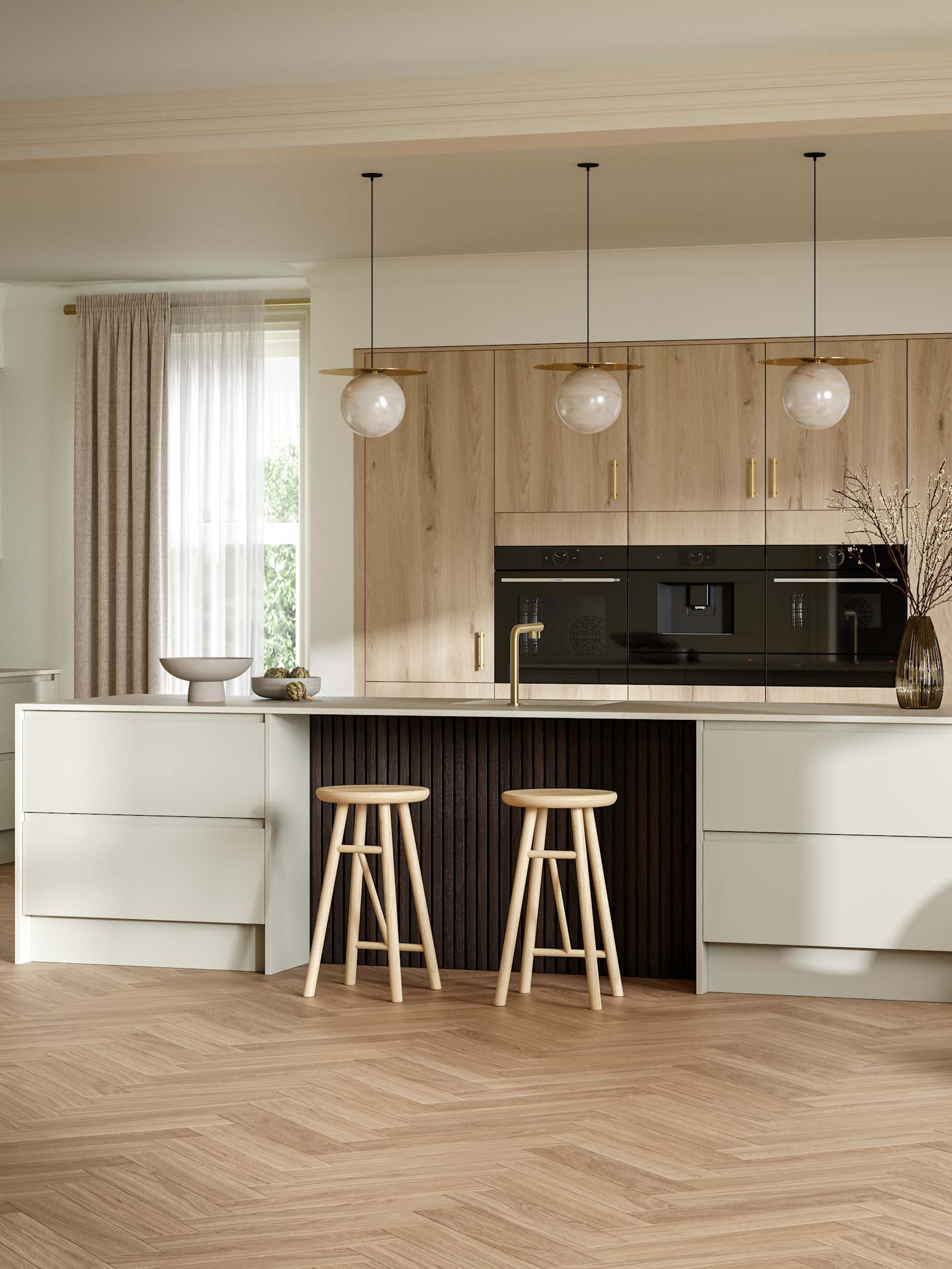
- Oak cabinetry with marble worktops
- Walnut accents with pale limestone surfaces
- Timber flooring with stone splashbacks
- Textured stone finishes alongside smooth painted cabinetry
Natural variation should be embraced rather than hidden. Grain patterns, colour shifts and stone veining add authenticity and ensure every kitchen feels unique.
Light also plays a crucial role. Natural materials respond beautifully to changing daylight, revealing texture and depth throughout the day and creating a kitchen that feels alive and connected to its surroundings.
Natural materials are also central to Scandinavian-inspired kitchens, where pale woods, soft neutrals and clean lines create a calm, considered feel. For more inspiration on bringing warmth, simplicity and natural texture into your design, explore our guide to creating a Scandi kitchen.
Bring your kitchen vision closer
Natural materials offer far more than visual appeal. They create kitchens with character, warmth and longevity — spaces designed to be lived in and loved for years to come.
If you're exploring a new kitchen, now is the perfect time to discover how timber, stone and other natural materials can transform your space. Book a free design appointment with a Magnet designer and start bringing your kitchen vision closer with expert guidance tailored around you.
Natural kitchen materials: FAQs
What are the pros and cons of using natural materials in the kitchen?
Natural materials offer timeless appeal, unique character and long-lasting quality. Features such as wood grain, stone veining and natural texture can add warmth and individuality to a kitchen. However, some materials require more maintenance than manufactured alternatives, with timber often needing periodic oiling and natural stone benefiting from sealing to protect against stains and moisture.
Which kitchen materials are the most eco-friendly?
Responsibly sourced timber is widely regarded as one of the most environmentally friendly kitchen materials, particularly when certified by organisations such as the FSC. Bamboo is another sustainable option thanks to its rapid growth rate, while responsibly quarried stone can offer excellent longevity. Choosing durable materials that won't need frequent replacement is often one of the most effective ways to reduce a kitchen's environmental impact.
What are the best natural materials for kitchen countertops?
Popular natural countertop materials include wood, granite and marble. Wood offers warmth and character, granite is highly durable and resistant to everyday wear, while marble is prized for its distinctive veining and premium appearance. The best choice depends on your lifestyle, aesthetic preferences and willingness to carry out ongoing maintenance.
What types of wood are best for kitchens?
Oak is one of the most popular choices thanks to its durability, attractive grain and versatility. Walnut offers a richer, more luxurious appearance, while bamboo provides a sustainable alternative with impressive strength. Engineered timber can also be a practical option for areas where additional stability is required.
How long do wood kitchen fittings last?
High-quality wood kitchen fittings can last for decades when properly cared for. Solid timber cabinetry, shelving and worktops are particularly durable and can often be repaired or refinished rather than replaced. Regular maintenance and protection from excessive moisture can help preserve their appearance and performance for many years.
Our bespoke design service


More from {{slotProps.categoryNames}}


Dedicated designer
Your expert, your guide, your go-to. From first hello to final fit.

Kitchen Retailer of the Year
Magnet has been recognised with four major wins for 2026.

Lifetime cabinet guarantee
All of our pre-built kitchen cabinets are guaranteed for a lifetime.