
Hurry, selected offers end soon Book now.
Find a showroom Kitchen sale

A Guide to Mixing Kitchen Materials

Mixing kitchen materials allows you to create a kitchen that is functional, stylish, and personal. From traditional pairings to bold contrasts, the key is to combine textures, colours, and finishes in ways that feel intentional and cohesive.

Whether your style is industrial, modern, natural, or classic, there are endless ways to make a kitchen feel dynamic while staying balanced.

Written by Cath Harrison (Head of Product) & Amy Fort (Product Expert)
Blog
Published 14 Feb 2025
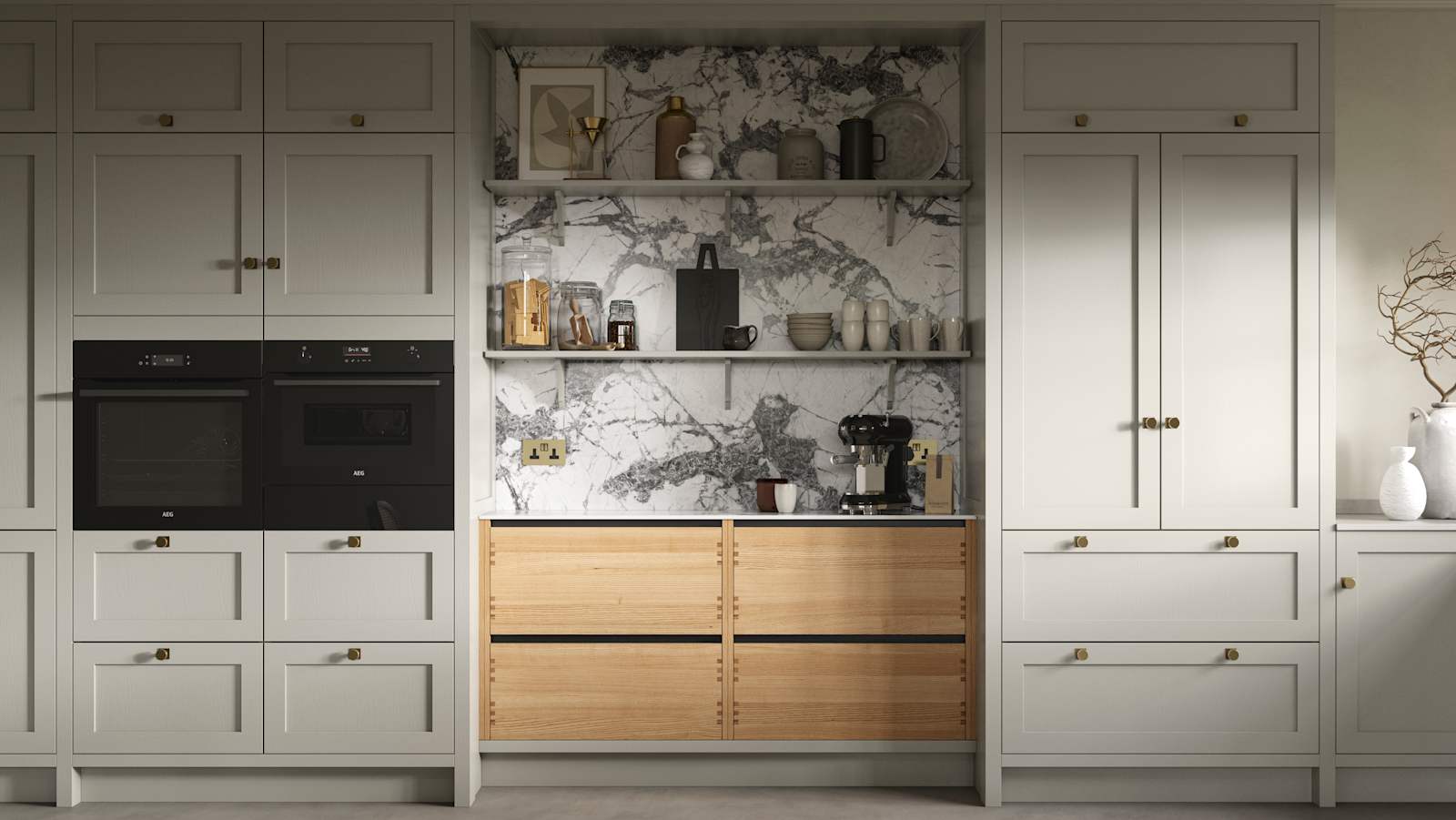
A neutral Shaker kitchen with Pebble and Nordic Craft cabinetry, marble splashback behind open shelves and paired with brass handles.

Wardley Pebble with Nordic Craft oak cabinetry

Some material combinations are better together than alone. By mixing surfaces thoughtfully, you can:

  • Create balance
  • Serve functional purposes
  • Define a distinctive style

Classic material pairings for your kitchen

Concrete, brick and steel

A Belfast sink set into marble or marble-effect worktops is a timeless combination. For a more distinctive look, try hammered copper sinks with sleek black surfaces for a rustic yet contemporary style.

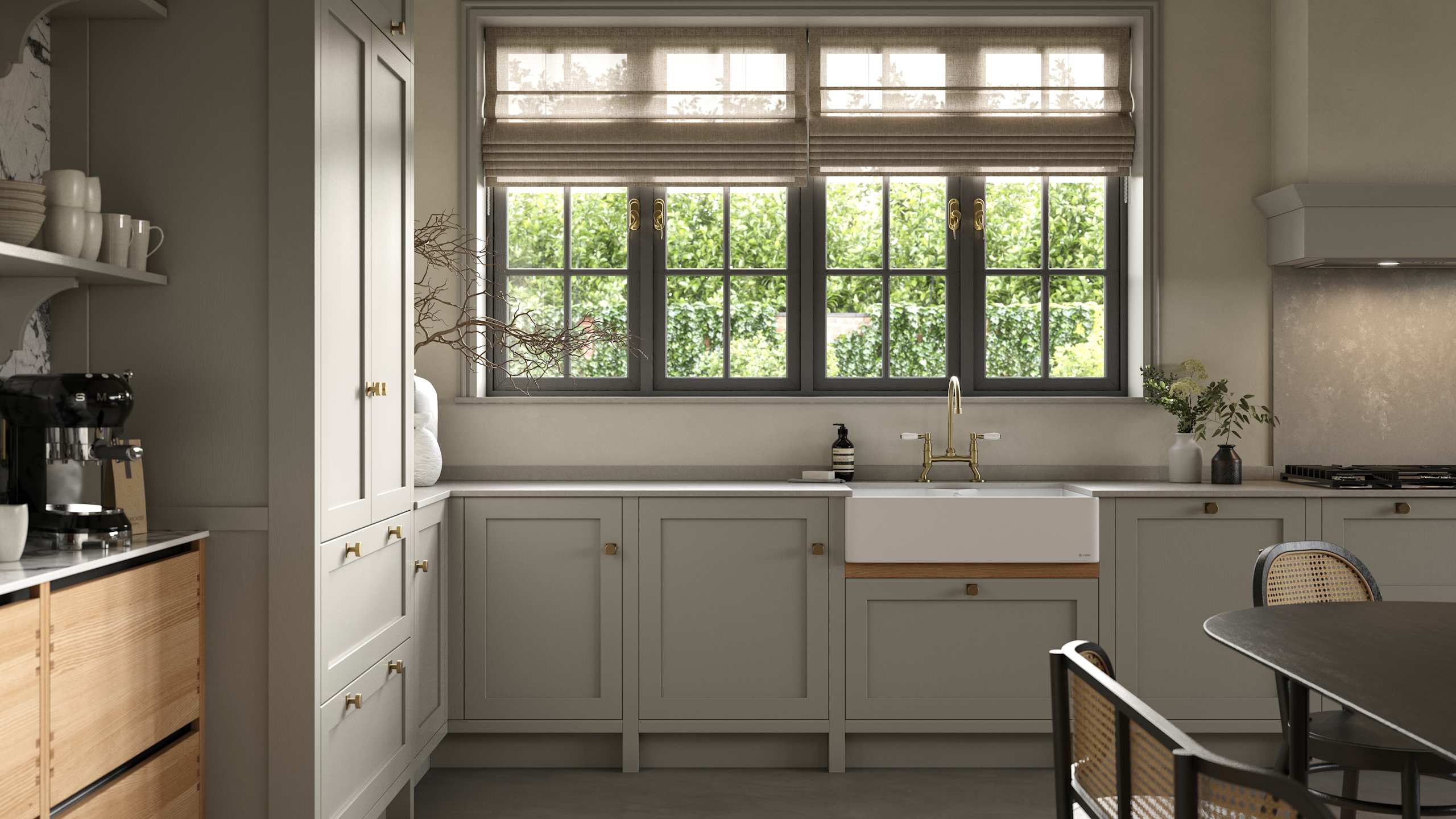
A neutral Shaker kitchen with Pebble and Nordic Craft cabinetry, belfast sink and traditional style tap.

Wardley, a neutral Shaker kitchen, paired with Nordic Craft.

Ceramic and marble

Bright ceramic sinks and stone worktops are a traditional mixed-material combination. We’re all familiar with the classic look of a thick ceramic Belfast sink set within a marble - or marble effect composite - worktop. 

These heavy-duty materials not only look stylish but are robust solutions for handling large and heavy cookware from stove to countertop to sink. 

Using alternative kitchen sink materials is a wonderfully natural way to create diversity in your kitchen worktops and evoke entirely new kitchen styles. 

For example, hammered copper sinks are brilliantly rustic and often associated with the farmhouse kitchen aesthetic, while a bright brushed copper sink set within a sleek black countertop exudes a high-end townhouse feel

Cast iron and reclaimed wood

Dark or reclaimed timber pairs beautifully with cast iron features, evoking historic kitchens with character and warmth. Combine with stone countertops and rich cabinetry for a layered, manor-house feel.

Dunham kitchen by Magnet. Smooth matt finish traditional or modern style available in over 20 colours.

Our Dunham kitchen range paired with a reclaimed wood fireplace.

Stone with high gloss or wood cabinets

Granite or marble works with matte-coloured or neutral-toned timber cabinets, while high-gloss cabinetry can enhance reflective surfaces. Balancing matte and gloss adds depth and light to your space.

Choose your champion material

If you’re unsure where to start, it might be best to identify the most significant or impactful material in your kitchen design and use this as a foundational element.

The grain of a marble, quartz or granite countertop or the various colours of a brickwood floor allow you to pinch a variety of accent colours to use in differently textured complementary materials. 

A large oak kitchen-dining table might be the kitchen centrepiece in position and function, around which other materials are more understated yet profuse.

Integra Nordic Nature. Modern kitchen concept with a sleek handless design and fluted oak effect wood doors

Magnet's Integra Nordic Nature kitchen, paired with natural materials. 

Luxe layering

Luxe layering is a trend that encourages combining textures, finishes, and colours to create depth and personality. For example, pair a modern kitchen slab door with timber shelving and stone worktops to create a cohesive and visually rich design.

Cabinets: Mix and match with style

Cabinets are the backbone of your kitchen. To mix and match kitchen cabinets:

  • Combine matte and gloss finishes for contrast
  • Pair timber-effect doors with painted cabinetry
  • Use textured finishes for natural depth


This approach allows you to create a layered, luxe feel while keeping your design cohesive.

True Touch: Ambleside Oak

Magnet’s True Touch technology brings timber-effect cabinetry to life. The Ambleside Oak finish replicates the deep grain and warmth of solid wood while remaining sustainable and low-maintenance.

  • End-Grain Print edging for full 360° realism
  • Recycled MDF and paper-based CPL for eco-responsibility
  • Textured surface for a tactile, natural feel


True Touch works perfectly in natural kitchen designs or shaker style designs, adding warmth, authenticity, and layered texture.

Ambleside Oak features True Touch technology.

Worktops: Materials that complement each other 

Kitchen worktops are both functional and visual anchors. To mix and match kitchen worktops, you could:

  • Pair stone with timber for tactile contrast
  • Combine Corian, quartz or ceramic with natural wood
  • Consider mixed materials for islands, peninsulas, or prep zones


These combinations enhance your kitchen’s sensory experience and create a balanced, sophisticated look.

Woman holding a brochure feeling the wood worktop with her hand in a neutral shade Shaker style kitchen in a Magnet Showroom

Consider pairing a timber worktop with a complementary natural material, like stone.

Use a cohesive colour palette throughout your cabinets, worktops and walls.

5 tips for successful material mixing

1. Try cohesive colour schemes

Blending materials can be as simple as controlling colour variation. Using a cohesive palette helps draw the eye naturally across different surfaces.

Some tried-and-tested combinations include:

  • Cool-toned granite with steel fixtures and appliances
  • Warm-toned granite with copper utensils and pan handles
  • Rich walnut worktops with deep brown panelled cabinets and leather stool seats
  • Concrete countertops with a large industrial steel sink
  • Ultra pale pink upper walls with gloss splashback tiles and displayed ceramic crockery

2. Go all out with colour drenching

To blur the lines between surfaces and textures, try colour drenching—applying multiple hues of the same colour across walls, cabinetry, worktops, and accessories.

This approach creates a bold, harmonious look while unifying a variety of textures and materials. Matching metals, wall colours, crockery, and cabinet finishes in monochromatic shades is a great way to achieve this effect.

Ludlow in blue shades Sky and Voyage blue, a traditional Shaker-style kitchen range featuring panelled doors with visible woodgrain and beading detail.

Our Ludlow kitchen range comes in 20+ paint-to-order colours.

Traditional Shaker-style tactile woodgrain Ludlow kitchen in bold shade Morello with matching wall panel and shelves, brass accents such as knobs and brass tap, a white ceramic sink, Ludlow parchment kitchen island and dusty oak vinyl flooring.

Premium Shaker range Ludlow, combining Morello and Parchment with brass accents. 

3. Select metal features carefully

Mixing metals in a kitchen can elevate your design, but too many contrasting finishes can feel chaotic.

  • Keep metal choices contrasting rather than matching to avoid an unintended clash.
  • Avoid leaving a single “orphan” metallic accent, which can appear like an afterthought.
  • Group metals by function - for example, use one finish for cabinet handles and another for taps.

This approach ensures your metals enhance the overall design rather than compete with each other.

4. Use panelled appliances to tame the mix

If your kitchen already includes a variety of materials, sometimes the best move is to reduce visual noise rather than add more.

Adding panelling to appliances that matches your cabinetry can minimise colour, tone, and texture contrasts. This works particularly well for mismatched dishwashers, fridges, or washing machines, helping your kitchen look cohesive and thoughtfully designed.

Contemporary scandinavian influenced Ascoli kitchen in fresh shade green Woodland and light grey, wall cabinets with timber accents like open shelves and oak laminate worktop, matched with oak laminate flooring and wood barstools at breakfast bar.

Ascoli in Woodland, featuring some panelled appliances.

Shaker style painted wood grain Bewdley kitchen in neutral shade Cornish Clay, tall cabinets and kitchen island with marbled worktop and matching backsplash, wine cooler in the kitchen island and gas range cooker.

A neutral colour palette creates a cohesive look using our Bewdley kitchen range.

5. Balance cabinet and wall colours

The relationship between your cabinets and walls impacts the overall feel and perception of space.

  • Darker cabinets can create contrast and make walls appear lighter, which works well in spacious kitchens or to highlight lighter finishes.
  • Lighter cabinets help open up small kitchens and can brighten a room, especially when paired with darker walls for a look often associated with modern kitchens.


Consider overall balance: use your main wall colour, cabinetry tone, and accents to ensure harmony throughout the kitchen.

Mixing kitchen materials: FAQs

Can I mix and match kitchen cabinets?

Yes, mixing and matching cabinets can create a dynamic, personalised kitchen. Many designers combine different colours, finishes, or styles to highlight zones, such as using a darker base cabinet with lighter wall cabinets. The key is to maintain cohesion through complementary tones or a unifying element like consistent hardware or worktops, so the overall design feels intentional rather than mismatched.

What is the 1:3 rule for cabinets?

The 1:3 rule is a design guideline used to create balance and visual harmony through cabinet hardware placement. It suggests that around one-third of your cabinetry should feature visible hardware such as handles or knobs, while the remaining two-thirds can remain handle-free or use integrated solutions.

Should your kitchen cabinets be lighter or darker than your walls?

As a general principle, cabinets are often slightly darker than walls to create depth and visual contrast, which helps define the kitchen’s structure. Lighter walls reflect more light, making the space feel open, while the slightly darker cabinetry anchors the room and highlights design features. However, the choice should also consider natural light, kitchen size, and your desired atmosphere. Softer contrasts suit smaller kitchens, while bolder differences work in larger spaces.