




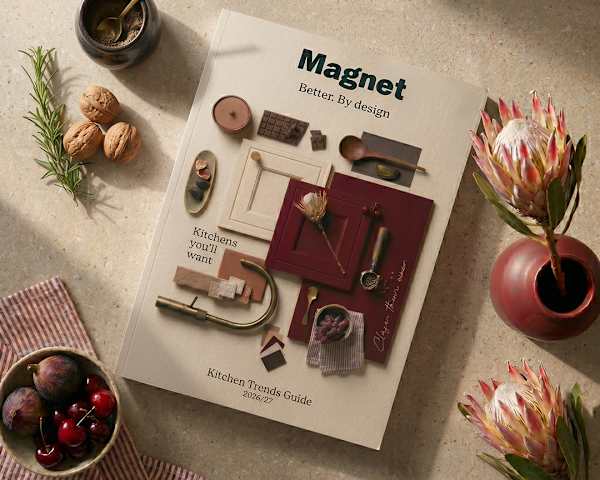
Introducing the Magnet Kitchen Trends Guide
Kitchen Corner Unit Ideas: How to Maximise Blind Corner Space
The dark internal corner where two perpendicular rows of kitchen cabinets meet is aptly named a blind corner, and deciding how best to use this hard-to-reach space can be a conundrum.
Clever corner storage can be particularly valuable in the design of small kitchen spaces, where making the most of every inch is essential.


Our range of kitchen corner storage
Le Mans corner storage unit
The Le Mans corner storage unit is designed to make the most of hard-to-reach corner cabinets. Featuring two kidney-shaped shelves that glide independently out of the cabinet, it brings the entire contents of the corner into view with a smooth, effortless motion. Unlike traditional corner cupboards, there’s no need to bend, stretch or search at the back to find what you need.
- Ideal for storing pots, pans, serving dishes and larger kitchen items.
- Provides full access to items stored deep within the corner cabinet.
- Smooth pull-out shelves help maximise storage while keeping contents organised and easy to reach.


Corner drawers
Corner drawers are chevron-shaped, designed to look like two drawers set at right angles. Pull one handle, and the entire unit slides out seamlessly. Once closed, the drawers align perfectly with adjacent cabinets. Once closed, the drawers align perfectly with adjacent kitchen units with doors.
- Perfect for keeping pots, pans, or baking trays organised in a compact corner.
- Maintains clean 90-degree corner lines, blending seamlessly with other cabinetry.
Corner carousel
A corner carousel works in either square or rectangular cupboards to improve access to internal space. Often referred to as a Lazy Susan, this storage solution typically consists of rotating shelves or 2–3 wire baskets that swing from the back of the cabinet to the front, making it easier to reach items stored deep within the corner. While circular carousel designs can sacrifice a small amount of storage space, they provide excellent visibility and access to cupboard contents. Maximum weight per basket is typically 25kg.
- Makes oils, spices, jars and everyday essentials easily accessible.
- Ideal for storing heavy or bulky items that benefit from rotational access rather than lifting.
- Eliminates the need to unpack and restack items to reach items at the back.
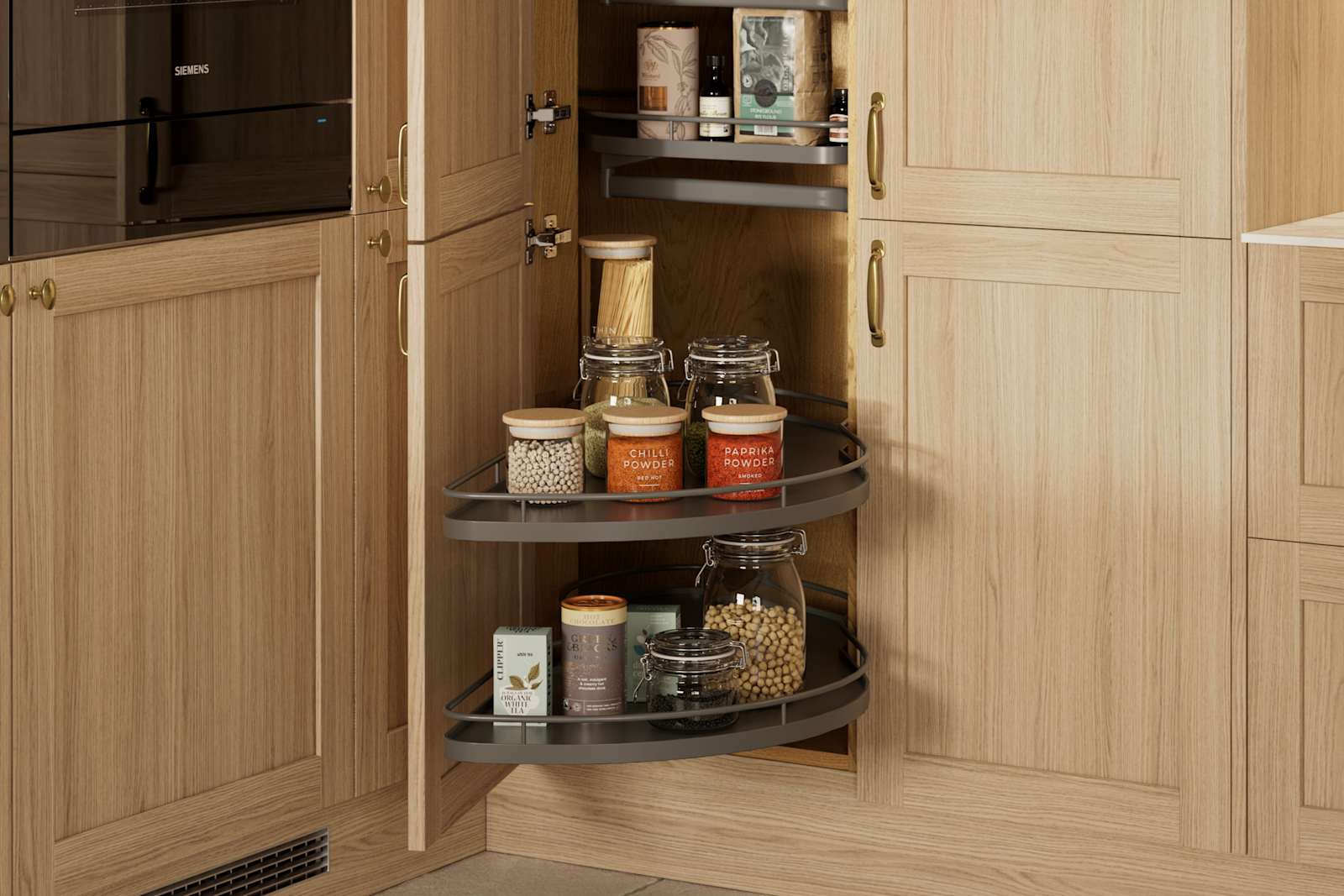

Magic corner or pull-out corner cabinet
Magic corner shelves pull out in sequence from the blind corner, revealing multiple racks as you pull the main drawer.
- Ideal for storing pots, pans, and kitchen gadgets that would otherwise be hard to reach.
- Maximises storage in deep or awkward corners.
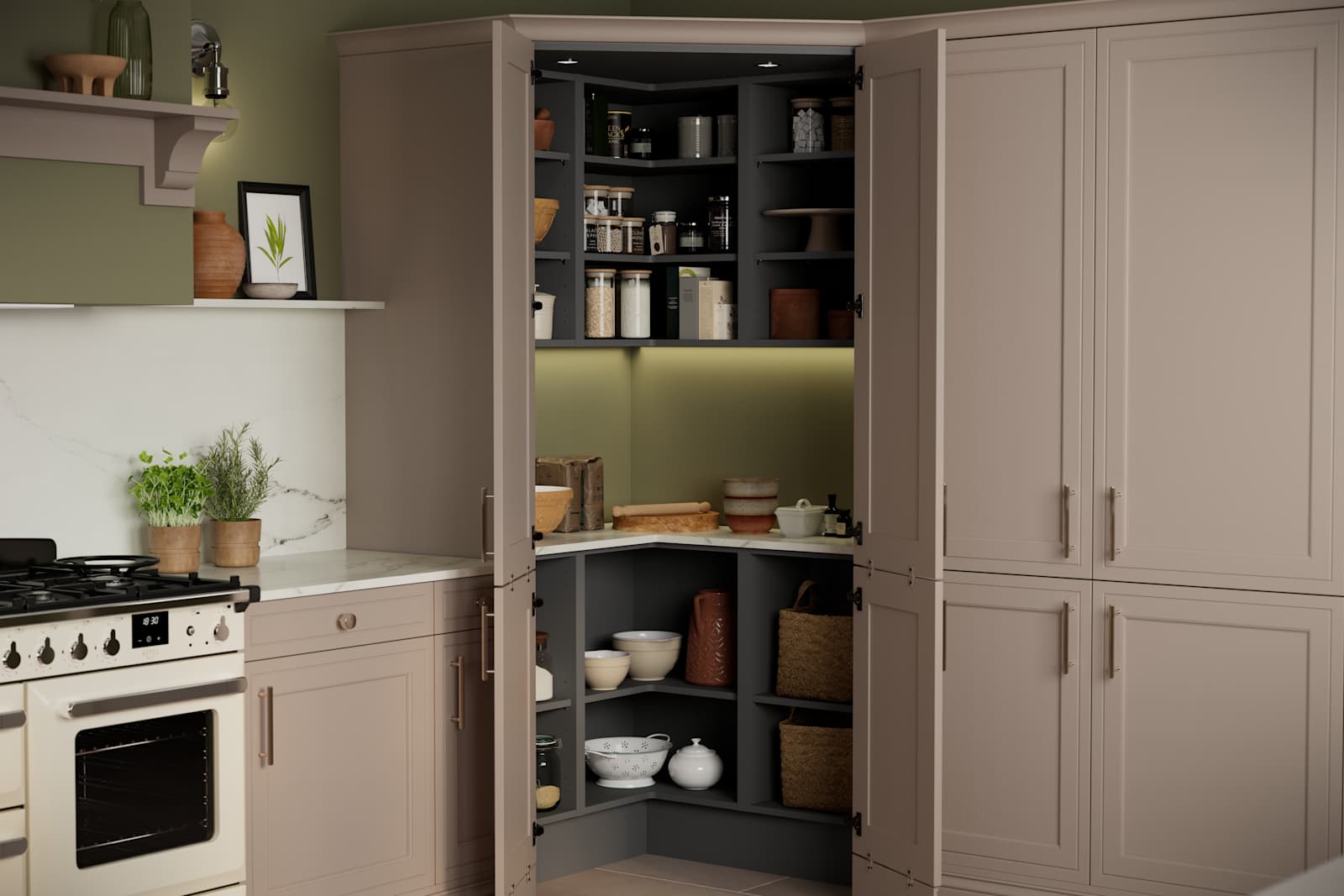
Corner pantry
Corner pantries create tall storage hubs with deep shelves and hidden drawers.
- Perfect for dry goods, appliances, or bulk-buy groceries.
- Helps declutter countertops while keeping essential items organised.
Sink cabinet
Corner sink cabinets store plumbing safely underneath and transform a kitchen corner into a functional wash station. They can sit within a 45-degree cabinet or wrap around a 90-degree countertop.
- Provides efficient use of corner space while integrating a sink naturally.
- Ideal for storing cleaning supplies or dishwashing essentials nearby.
Joining Magnet’s Ambleside collection, the Oak blind corner larder is designed to turn awkward, underused corners into high-functioning storage. With customisable shelves and fittings, it brings everyday essentials to your fingertips.
- Ideal for storing dry goods, appliances, and kitchen tools in a compact corner
- Complements natural and classic kitchen styles
- Integrates beautifully with your existing cabinetry
For more clever storage solutions, see the 2026/27 Kitchen Trends Guide


Maximise your corner storage
Corner storage is not just about using space, it’s about improving your kitchen workflow and reducing clutter:
- Store tall or bulky items – Bottles, cereal boxes, and stockpiled groceries fit well in corner pantries.
- Keep everyday items accessible – Lazy Susans and magic corners make oils, spices, and frequently used appliances easy to reach.
- Dedicate zones – Consider your kitchen zones: cleaning, prep, cooking, or serving. Place items in the corner to free up more accessible areas.
- Declutter countertops – Move coffee machines, blenders, or bulk storage items into the corner to keep your worktop clear.
- Use vertical space – Tall larder units or blind corner larders maximise storage without enlarging your footprint
How do I decide what’s best for my kitchen?
Next time you’re eyeing up your corner space for renovation, take a look at what occupies the adjacent space. Depending on your preferred storage mechanism, there needs to be enough clearance for nearby doors and drawers to open.
Take note of whether your corner space is next to any hot appliances, too. You might not want to choose a pantry storage unit if it’s next to a hot stove, for example.
Kitchens are usually split into different zones to make our movements more efficient. What you find in a particular zone might be best placed for food preparation, cooking, cleaning or serving, for example.
So, if your kitchen corner is next to your dishwasher or washing machine, perhaps you’d prefer a deep storage solution for tall cleaning products.
There’s nothing to stop you from using your corner to create an entirely new zone, however. Depending on the available diagonal space, a fridge-freezer and even a corner oven unit or range cooker can sit in a corner space, with handy storage beneath.
Your chosen storage solution will need to support the weight of any items it holds, so having at least a rough idea of what you’d like to store in your corner unit can greatly help the final decision.
Be sure to get advice from a specialist if you’re worried about the load-bearing capacity of certain storage options.
If you have a minimalist aesthetic in your kitchen, or you already have several banks of drawers, you may want to steer away from adding extra diagonal or corner drawers that could make the overall look seem “busy”.
Equally, if you already have many tall appliances or cabinets, adding a corner pantry might be a little imposing. A better solution could be to increase your countertop space instead.
More innovative, highly-engineered solutions such as magic corners will cost more than regular solutions such as corner cabinets. However, the improved accessibility and extra space might be non-negotiable for you.
It’s possible to strike a balance, so have a firm idea of what you want from the space versus what you’re willing to pay and a clear choice should present itself.

Kitchen corner unit ideas: FAQs
What can you do with corners in a kitchen?
Kitchen corners can be transformed into highly functional storage areas rather than wasted space. With the right design solution, they can accommodate everything from everyday cookware to pantry items. Options like rotating carousels, pull-out shelving, or bespoke corner units help make these areas more accessible and practical, ensuring no space is underused.
How do you make use of dead space in a kitchen corner?
Dead space in kitchen corners can be activated through clever storage design that improves access and usability. Solutions such as lazy Susans, rotating corner trays, or angled cabinetry allow you to reach deep into otherwise awkward areas. Even open shelving or decorative displays can help turn an unused corner into a purposeful feature of the kitchen.
How can you fill an empty corner in a kitchen?
An empty kitchen corner can be filled in a way that suits both function and style. You might choose built-in storage, a corner larder unit, or open shelving depending on your needs. Alternatively, the space can be used for a small coffee nook, appliance station, or decorative feature, helping it feel intentional rather than overlooked.
Are corner larders a good idea?
Corner larders can be an excellent use of space when designed well, offering generous and accessible storage in areas that are often difficult to optimise. They work particularly well in larger kitchens or where additional pantry space is needed. However, the suitability depends on layout - good internal organisation and easy access are key to making them truly effective.
What are some alternative solutions for kitchen corners?
Beyond traditional corner cabinets, there are several alternative approaches that can make better use of the space. These include open shelving for display, built-in seating, appliance stations, or even extending worktops into a wraparound surface. The right solution depends on how you use your kitchen, but the aim is always to make the corner feel integrated, useful and considered.
Our bespoke design service


More from {{slotProps.categoryNames}}


Dedicated designer
Your expert, your guide, your go-to. From first hello to final fit.

Kitchen Retailer of the Year
Magnet has been recognised with four major wins for 2026.

Lifetime cabinet guarantee
All of our pre-built kitchen cabinets are guaranteed for a lifetime.