



Home Coffee Bar Ideas To Elevate Your Kitchen
Everyone has their own way of fitting coffee into their day. For some, it’s a bare essential. For others, a luxurious self-care ritual.


A home coffee bar can be both. It’s a practical addition to high-traffic kitchens, where grabbing a hot drink might normally mean leaning around someone who’s busy preparing food or feeding family members in order to retrieve the kettle. It’s also a fabulously focused area to retreat to, to indulge in your coffee customs.
Home Coffee Bar Ideas
A coffee machine does not a home coffee bar make. In fact, there are several elements that must come together to make the coffee bar aesthetic complete.
Where should you place your coffee bar?
The question of where your coffee bar will exist is one of the most important. Like all things we interact with on a daily basis, the area you create should be practical and enjoyable.
This means easy access and a level of comfort, with all the necessary tools and tastes at your fingertips. A few kitchen areas that fit the coffee-bar brief include:
An Alcove
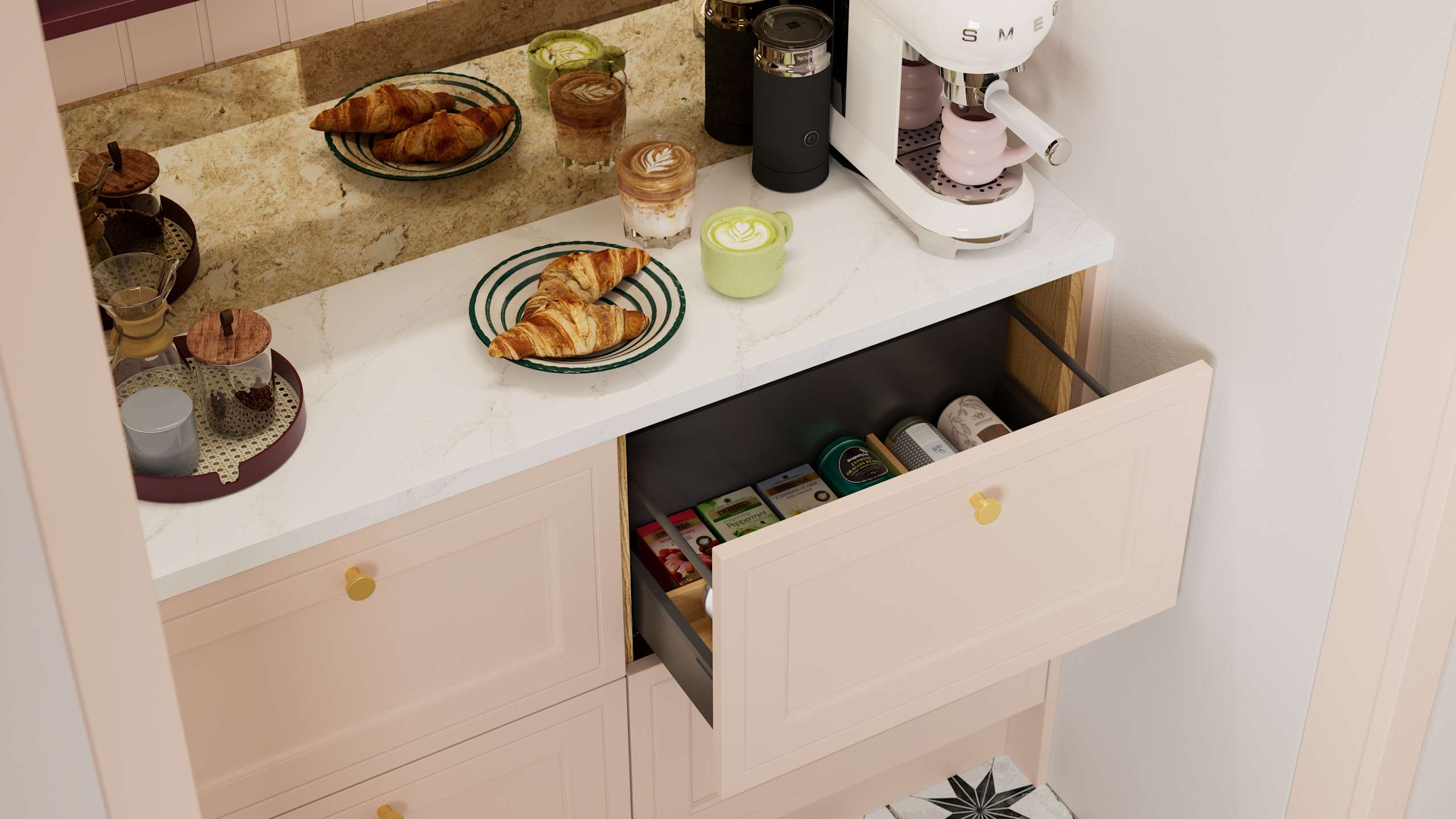
Why resign the alcove to a space for assorted kitchen and homeware when it can be a dedicated coffee station? Along with fitted shelves reserved for mugs and cups, this secluded section of the kitchen offers up the perfect opportunity to implement separate decor and lighting features to the rest of the kitchen.


Closet
Similar to the alcove, a closet area or large larder, like the 500 traditional larder, can define a space as a specific coffee station.
With shelves for crockery, compartments for bulk buy coffee supplies, and shelves for appliances and coffee preparation, you can create a coffee zone without the traditional countertop space.
Corner counter
There’s a reason the corner counter often hosts coffee making facilities. It’s away from the hustle and bustle of everyday meal prep and dining areas and the kitchen cabinets beneath are perfect for storing coffee essentials and extras such as coffee pods or a selection of flavoured syrups.
Bartop space with seating
If you have a G-shaped kitchen peninsula, breakfast bar or any kitchen countertop with legroom underneath - perhaps one that used to house a washing machine - you could transform this area into your very own coffee bar with stools or other seating.
It’s a luxurious addition to the standard coffee station but highly practical for entertaining friends who pop by for a not-so-quick cup or leisurely mornings by yourself with a newspaper or magazine.


Standalone kitchen cabinet
A coffee station cabinet offers many possibilities - for instance a disposal drawer for coffee grounds or a small fridge unit for milk and cream. You might also consider whether you want to plumb in a separate sink to make it a self-sufficient coffee space.
Moveable coffee station
A trolley, cart, or portable cabinet is a great option if you don’t want to commit a fixed area of the kitchen to coffee needs alone. This is especially useful in smaller kitchens, where space is limited and flexibility is key.
A trolley can tuck away all your coffee supplies in baskets or on a shelf behind a curtain or “skirt.” You can also move it to your preferred seating area and gain access to power sockets around the kitchen, making it a compact, versatile, and functional coffee solution.
How to light your coffee bar?
Lighting sets the tone for your coffee ritual:
- Task lighting such as under-shelf puck lights ensures your station is practical for early mornings.
- Pendant or ambient lighting creates a cosy area to enjoy your coffee at leisure.


Appliances
Your choice of appliance can often play a part in where you need to set up your coffee station, so it’s a good idea to bear in mind whether you need access to multiple power sockets and plumbing.
You might want immediate access to a sink or dedicated hot water tap, and space for a coffee machine, grinder, frother, radio or sound system, and even a small fridge.
Shelving and pantry solutions
Open shelving displays mugs, glasses, and coffee essentials, making the space instantly recognisable.
Pantry or cupboard solutions hide larger consumables like coffee bags, pods, or long-life milk, keeping the area tidy.
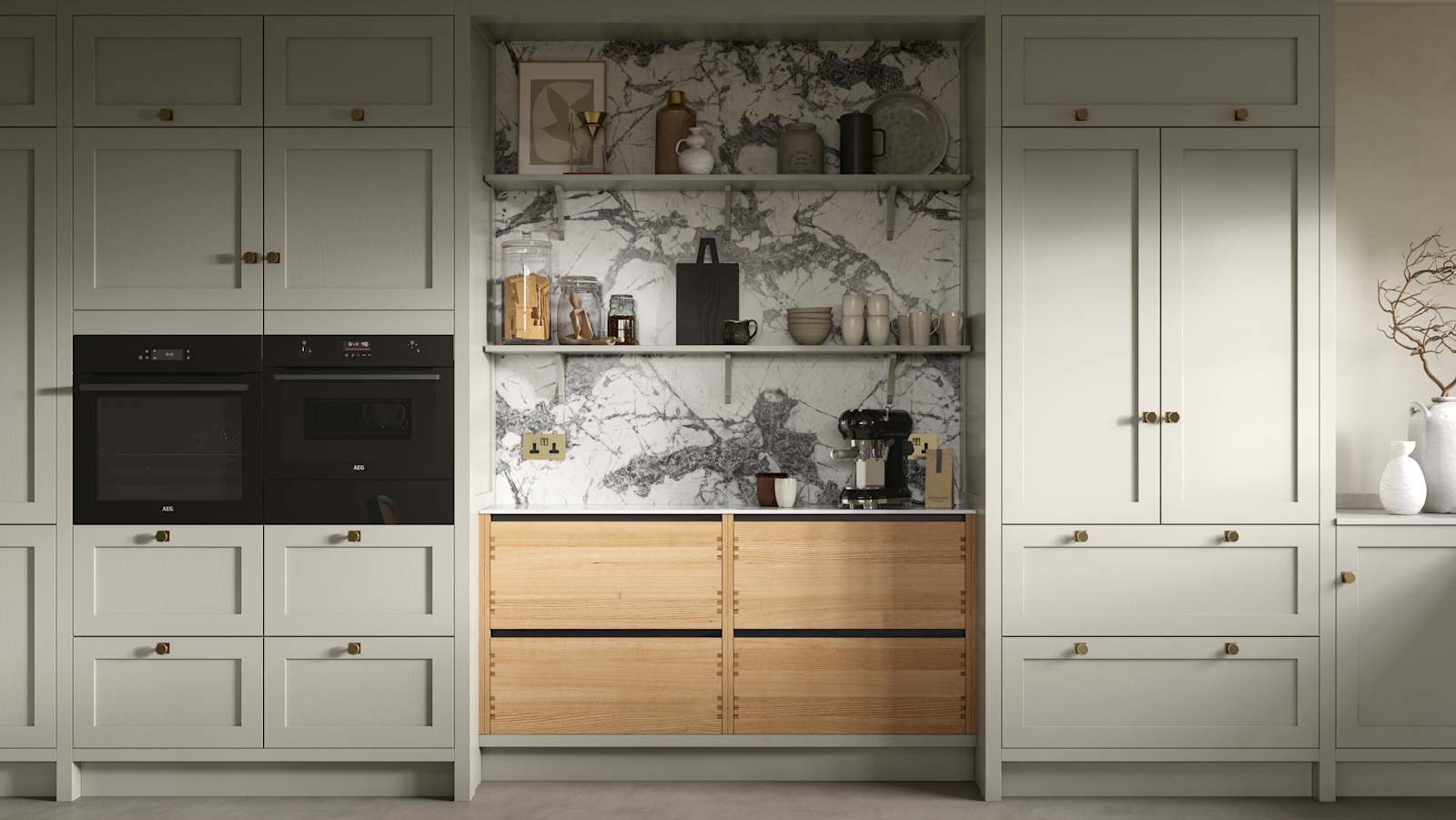

Pantry solution
While your shelving choice allows you to display your personal style, a cupboard or pantry solution lets you hide away less sightly things.
Conceal large consumables, such as big coffee bags, boxes of coffee pods, or cartons of long-life milk in deep drawers, shelves or pantry units.
How to decorate your coffee station?
Whether you’re a fan of the Parisien cafe, urban coffee shop or cosy aesthetic, there are a number of design moves you can make to bring your coffee station ideas to life.
If you're looking for inspiration beyond your coffee nook, explore our designer kitchen ideas to discover creative ways to personalise your space through colour, materials, storage and styling.
Why not try:
- Warm wood fixtures and earthenware mugs for a rustic or homely style
- Marble worktops, gold accents and glassware displays for an upmarket look (and to serve up a variety of speciality coffees)
- Exposed brickwork or a mirrored backsplash for an urban coffee bar experience
- Metal fixtures, concrete worktops and the obligatory commercial-grade coffee machine for an industrial feel
- Trailing plants, artwork and mismatched crockery for an undone, bohemian style.


What should be included in a coffee station?
To make your coffee station both beautiful and functional, include:
- Coffee essentials – Machine, grinder, frother, and kettles
- Storage solutions – Drawers, shelves, or trolleys for pods, beans, and syrups
- Crockery – Mugs, cups, and spoons, ideally on open display for convenience
- Small fridge or milk storage – Keeps milk, cream, or alternative milks handy
- Organisers – Trays, jars, or baskets to group items by type
- Cleaning supplies – Small cloths or brushes to keep the station tidy
- Optional extras – Decorative elements such as plants, signage, or artwork to personalise the space
Organise the station so everything has its place, balancing practicality and aesthetics. A well-structured coffee bar ensures a smooth routine while creating a visually appealing feature in your kitchen.
What’s Trending for Coffee Nooks in 2026
The latest kitchen trends show that coffee stations are no longer just functional—they’re design-led focal points in the home. For 2026, the emphasis is on creating spaces that are both practical and personal, inspired by Magnet’s “Bar and Coffee Nooks” trend.
Key trends include:
- Integrated spaces – Shallow-depth cabinetry and bespoke alcoves transform overlooked corners into fully functional coffee stations.
- Micro-moments – Coffee nooks are designed to create small, relaxing rituals within busy kitchens, offering both convenience and calm.
- Matching and complementary finishes – Coordinated cabinetry, shelving, and surfaces ensure your coffee zone feels part of the overall kitchen design while still standing out.
- Customised storage – Dedicated compartments for mugs, coffee pods, syrups, and appliances help keep everything organised and accessible.
- Atmospheric lighting – Accent or pendant lighting highlights your coffee station, creating a cosy, inviting space for daily rituals.
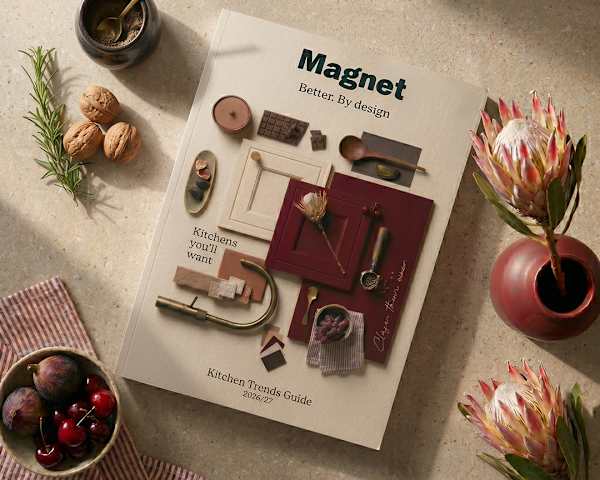
Explore more inspiration for 2026’s coffee bar trends in the 2026/27 Kitchen Trends Guide and see how you can bring a stylish, practical coffee nook into your own home.
Coffee bar ideas: FAQs
What should a coffee station include?
A well-designed coffee station should include everything you need for a smooth, everyday routine without cluttering your kitchen. Essentials typically include your coffee machine, mugs, coffee storage (beans, pods or ground coffee), and a small selection of accessories such as spoons, sweeteners or a milk frother. Thoughtful additions like a tray or dedicated shelf can help define the space and keep everything feeling intentional and neatly contained.
How do I create a simple coffee station?
Start by choosing a dedicated surface or corner and keeping the setup minimal. A coffee machine, a couple of key containers and your everyday mugs are often enough. The aim is to keep it functional and easy to maintain, so avoid overloading the space. Using a tray or small organiser helps bring structure, while a consistent colour palette or material finish keeps the look cohesive and calm.
Where is the best place to put a coffee station in a small kitchen?
In a small kitchen, the best location is usually a compact, low-traffic area that doesn’t interrupt your main cooking workflow. This could be a section of worktop near a socket, a corner of your kitchen counter, or even within a tall unit or open shelving run. The key is accessibility - ideally close enough to your kettle or water source, but separate enough to keep preparation zones clear.
How should I organise a coffee station?
Good organisation is about keeping everything visible, accessible and grouped by use. Store daily items - like coffee pods, mugs and spoons - together, ideally at arm’s reach. Use jars, containers or drawer inserts to separate items neatly, and keep surfaces as clear as possible to avoid visual clutter. A well-organised coffee station should feel effortless to use, while still looking considered and tidy.
Our bespoke design service


More from {{slotProps.categoryNames}}


Dedicated designer
Your expert, your guide, your go-to. From first hello to final fit.

Kitchen Retailer of the Year
Magnet has been recognised with four major wins for 2026.

Lifetime cabinet guarantee
All of our pre-built kitchen cabinets are guaranteed for a lifetime.