
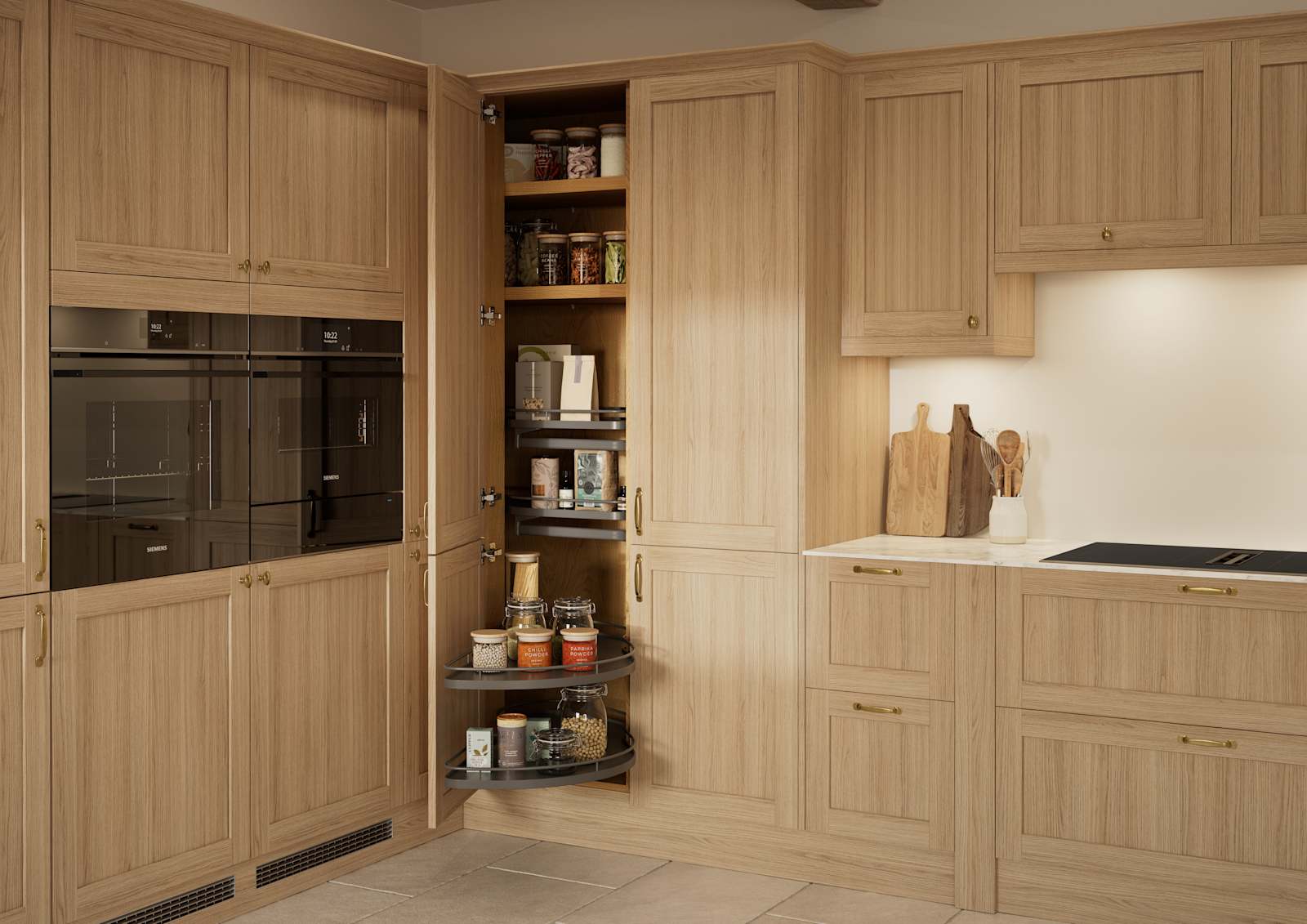
Oak remains a popular choice for kitchens thanks to its natural warmth and distinctive grain. Oak-effect cabinets and doors bring character and texture to a space, working just as well in modern kitchens as they do in more traditional settings.

When it comes to designing a kitchen, nothing brings warmth, texture, and timeless style quite like wood-effect kitchens. These finishes combine the natural look and feel of solid wood with the practical benefits of modern materials.
Whether you're drawn to the richness of oak, the subtlety of ash, or the rustic charm of walnut, understanding wood-effect finishes will help you choose a kitchen finish that you’ll love for years to come.


While both options bring natural character and warmth to a kitchen, wood-effect and solid wood kitchens differ in their construction, performance and cost. Solid wood kitchens are crafted from natural timber, offering unique grain patterns. Wood-effect kitchens, on the other hand, use materials such as laminate, veneer or engineered boards that are designed to replicate the look and texture of real wood.
Advances in manufacturing mean today's wood-effect finishes can closely mirror the grain, colour and character of natural timber, often at a more accessible price point and with lower maintenance requirements. These finishes can be applied across kitchen doors and cabinets, making it easy to create a cohesive look, whether you prefer a classic Shaker design or a sleek contemporary space.


Wood-effect kitchens have surged in popularity for a reason. They provide:
If you love the look and feel of natural materials, wood-effect kitchens offer a great way to explore different textures, tones and finishes.
Choosing the right wood-effect finish is about more than selecting a colour or grain pattern. From the amount of natural light in your room to the materials and finishes you pair it with, every design choice plays a part in the overall look and feel of your kitchen. Here are a few things to consider when narrowing down your options.
True-touch laminate is designed to bring the look and feel of real wood into your kitchen, without the price tag or upkeep of solid timber. It recreates the grain and texture of natural wood in a way that feels more authentic than standard laminate, while maintaining its appearance over time, even in busy, well-used spaces. Made with up to 75% recycled materials, it’s also a more considered choice, combining sustainability with a design that’s built to last.
Explore the Ambleside Oak kitchen range with True-touch laminate, designed to recreate the natural grain of real wood with a durable, low-maintenance finish.
/Ambleside%20flat%20lays/Ambleside_Details_033)
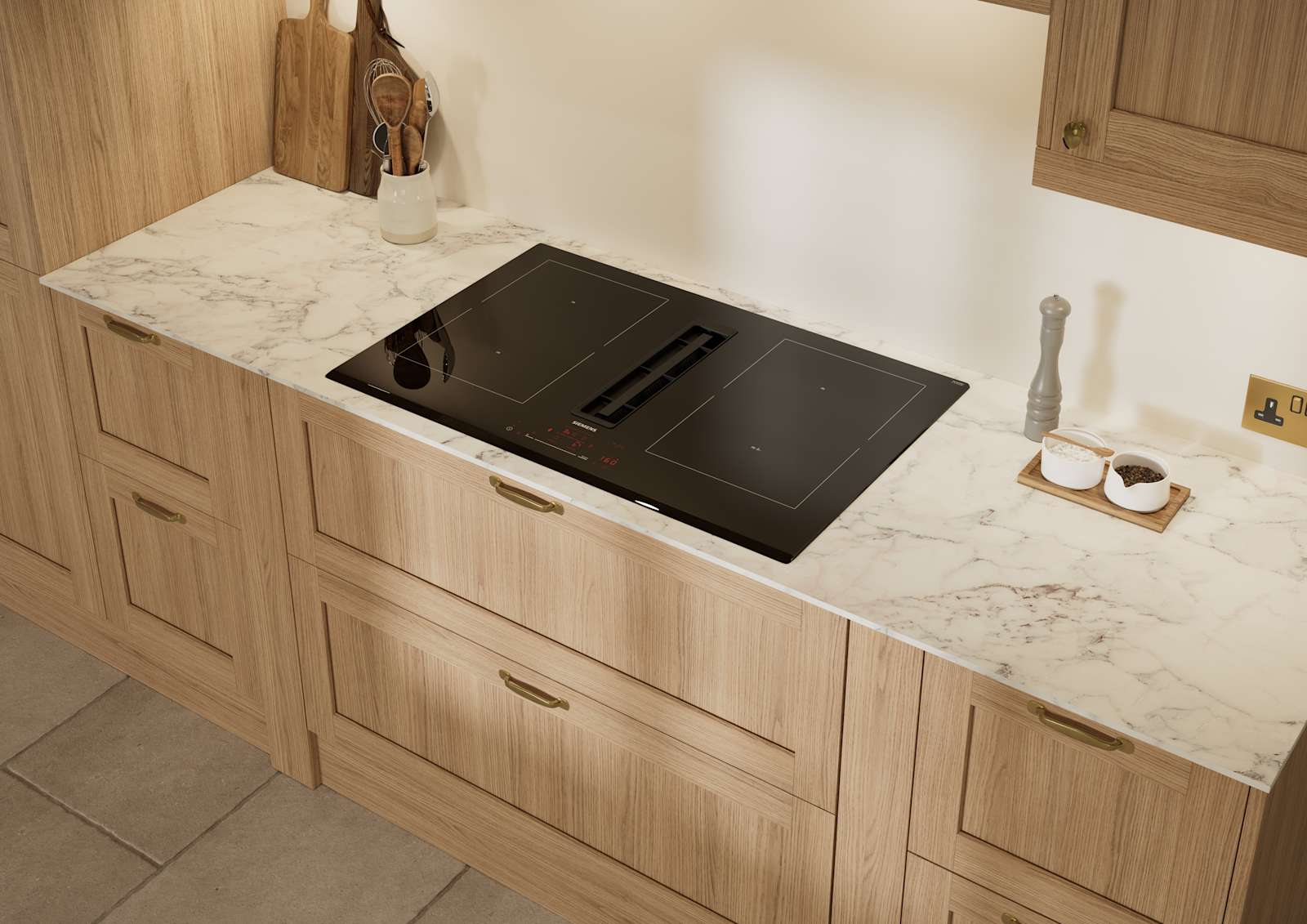
In 2026, kitchens are moving towards natural materials and tactile finishes that feel authentic and enduring. Wood-effect cabinetry leads the way, bringing the warmth of timber with the practicality of modern design, while stone-inspired surfaces and brushed metals add depth and balance.
This layered, nature-led approach creates kitchens that feel more human, lived-in and timeless. It’s about texture, tone and subtle variation rather than high gloss perfection.
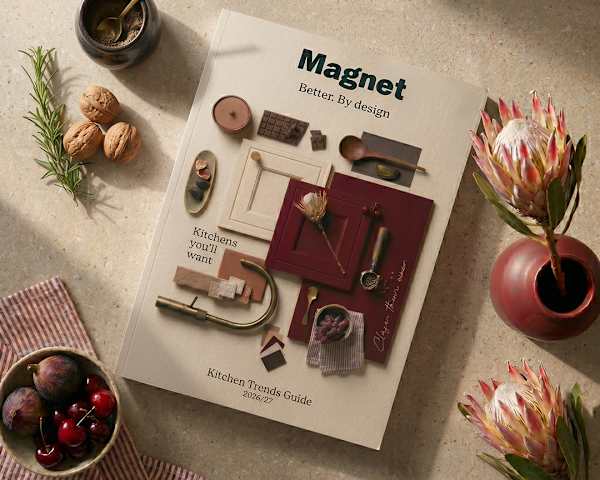
Explore more ideas shaping the future of kitchen design in our 2026/27 Kitchen Trends Guide.
Wood-effect kitchens are made using modern materials such as laminate, veneer or engineered boards that are designed to replicate the look and texture of natural wood. These surfaces are carefully manufactured to mirror the grain, colour and character of timber, while offering a more practical, everyday alternative to solid wood.
Yes. Wood-effect finishes are designed to be highly versatile, making them easy to pair with a wide range of kitchen styles and materials. They work well alongside stone-inspired worktops, metallic details and painted finishes, helping you create a coordinated look throughout your space.
Wood-effect kitchens offer the appearance of natural timber with added practicality. They are generally more resistant to everyday wear, including moisture, stains and scratches, and require less maintenance than solid wood. They also tend to be more cost-effective, making them a popular choice for busy family kitchens.
With the right care, wood-effect cabinets are designed to last for many years. High-quality finishes are made to withstand daily use, helping them maintain their appearance over time. Their durability makes them a reliable option for kitchens that need to balance style with long-term performance.


/Ambleside%20flat%20lays/Ambleside_Details_013)